On this page(10)
What Is Email Marketing Automation?
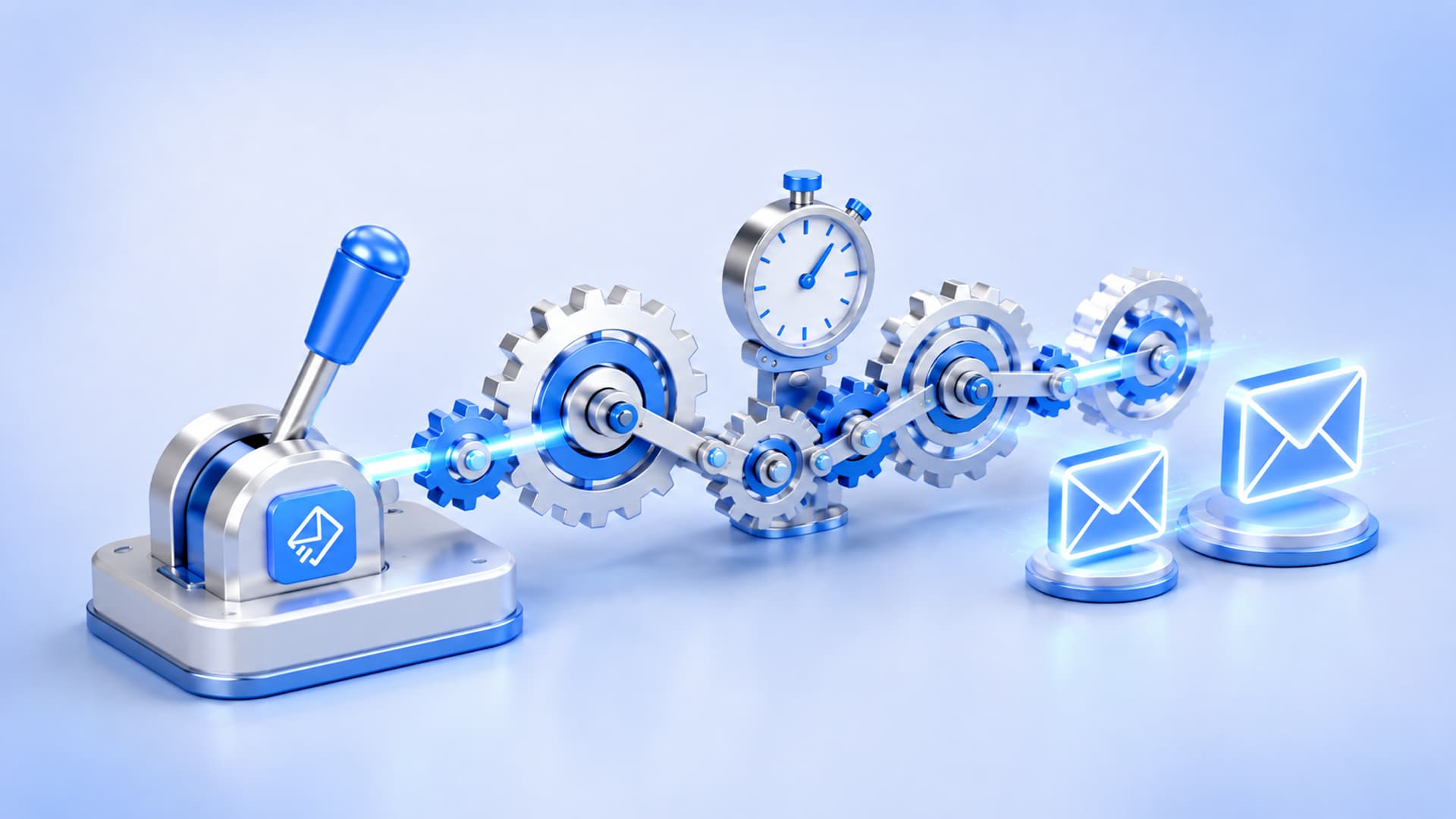
If you send email for a small business, an agency, an ecommerce store, or a SaaS product, this guide is for you. Email marketing automation is simply the practice of sending the right email to the right person based on what they do, without you having to press send every time. Instead of writing one broadcast and blasting it to everyone, you set up rules once and let the system deliver messages on its own schedule.
Done well, automation feels personal to the reader and quiet to you. Done carelessly, it turns into noise. This post covers what it actually is, the pieces that make it work, and a few examples you can copy.
The plain-English definition
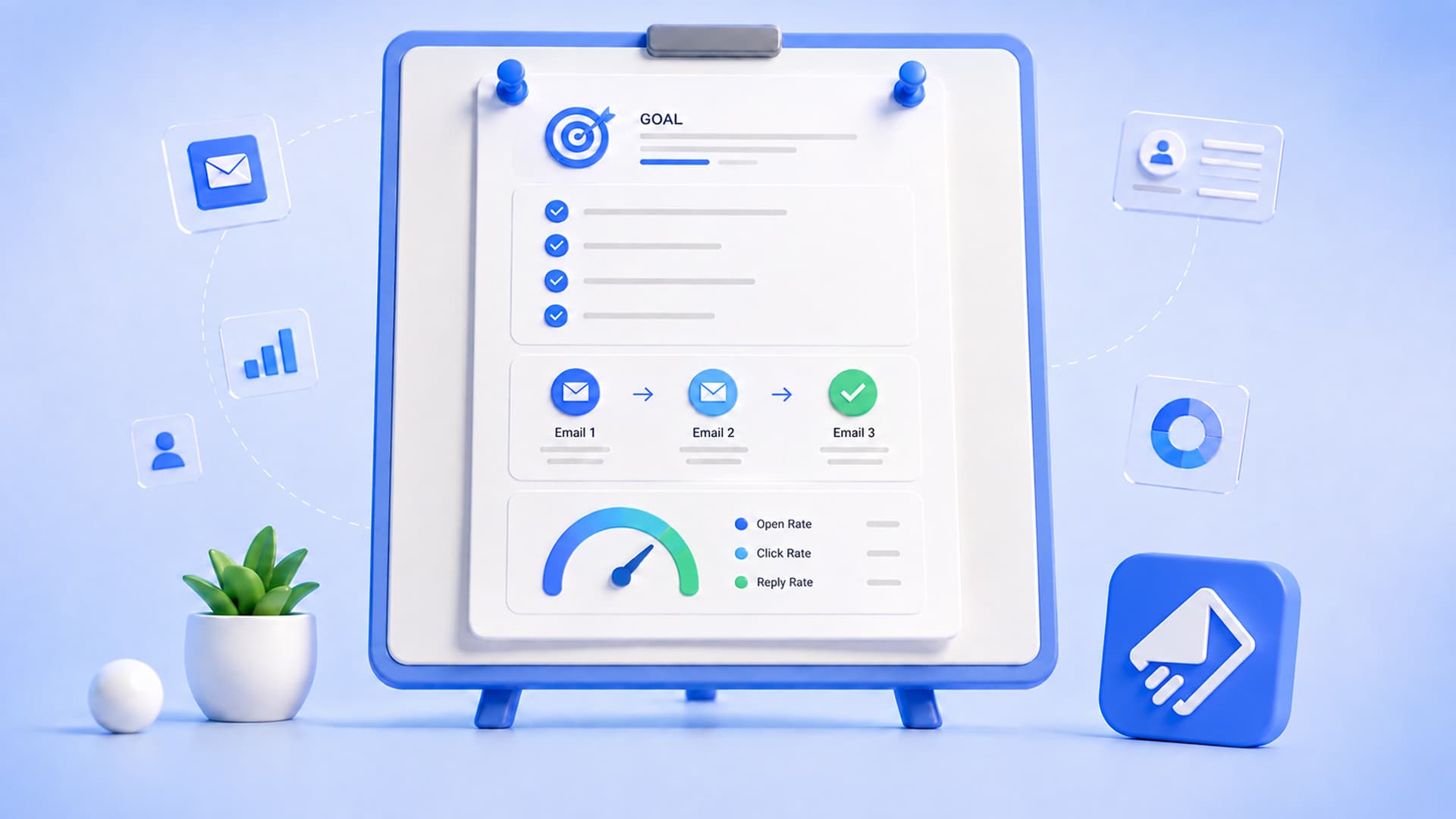
Email marketing automation is a set of emails that get triggered by a person’s behavior or by a date, rather than sent by hand. A trigger is the event that starts things. A sequence is the ordered set of emails that follows. A condition decides who moves forward and who does not.
Think of it like a helpful assistant who watches for a signal, then follows a script you wrote. Someone joins your list, so they get a welcome. Someone abandons a cart, so they get a reminder. And, someone downloads a guide, so they get a short series about that topic. You wrote each message once. The assistant handles the timing and the sending.
How it differs from a regular campaign
A regular email campaign is a one-time send. You build it, pick a list, and it goes out to everyone at once. That is great for a newsletter, a launch, or a seasonal announcement.
Automation is different in three ways:
- It is triggered, not scheduled by you. The clock starts when a person does something, so each contact experiences it at their own pace.
- It runs continuously. A new subscriber today gets the same welcome series a subscriber got last month. You are not re-sending anything.
- It responds to behavior. If someone opens, clicks, or replies, the path can change. That responsiveness is the whole point.
Most teams use both. Broadcasts for timely news, automations for the repeatable moments that happen over and over.
The building blocks
Every automation, no matter how fancy, is made of a few simple parts. Once you can name them, the tools stop feeling mysterious.
Triggers
The starting signal. Common ones include a new subscription, a form submission, a tag being added, a purchase, or a specific link click. In a good automation builder you pick the trigger from a list and the rest follows.
Steps and delays
The emails themselves, plus the waiting time between them. A delay might be a few hours, a day, or a week. Delays are what keep a sequence from feeling like a firehose.
Conditions and branches
Rules that split the path. If a contact clicked the pricing link, send the case study next. If they did not, send a gentler nudge. Branching is optional. Plenty of effective automations are a straight line.
Exit rules
The moment a contact should stop receiving the sequence. This is the part people forget, and it matters most. The cleanest exit rule is a reply. If someone writes back, they have started a conversation, and the automation should get out of the way.
Follow-up that stops when someone replies
Here is the idea EmailSendX is built around: email that follows up for you, and knows when to stop. A follow-up sequence should send its next step only if the previous one did not get a response. The instant a contact replies, the sequence ends and a human takes over.
This keeps two things from happening. First, nobody gets a “just following up” note ten minutes after they already answered you, which feels careless. Second, your follow-ups stay useful instead of nagging. In EmailSendX, sequences stop the moment someone replies, and the conversation lands in your shared inbox so a real person can pick it up.
A quick note on framing. This is permission-based follow-up, meaning you are messaging people who asked to hear from you, subscribed, bought something, or filled out your form. It is not cold outreach to strangers. The stop-on-reply behavior is what makes warm follow-up feel like good manners rather than pressure.
A sample welcome sequence you can copy
The best way to understand automation is to see one. Here is a simple five-email welcome series triggered when someone subscribes. Adjust the timing and voice to fit your brand.
- Immediately: Welcome and set expectations. Subject: “You’re in. Here’s what to expect.” Deliver whatever you promised at signup and tell them how often you’ll write.
- Day 2: Your best resource. Share one genuinely useful thing, a guide, a checklist, a short video, with no ask attached.
- Day 4: A short story or origin. Why you do this work. People buy from people, and this builds trust.
- Day 7: A soft invitation. Point to your product or service and explain who it’s a fit for. Subject: “Is this a fit for you?”
- Day 10: An open question. Ask them to reply with their biggest challenge. Replies here should exit the sequence and route to a person.
Notice the shape. Give value first, ask later, and end on an open door rather than a hard sell. That last email doubles as your exit trigger, so anyone who engages moves into a real conversation instead of getting more automated mail.
Where automation earns its keep
You do not need dozens of automations. A handful of well-placed ones cover most of the value. The common workhorses:
- Welcome series for every new subscriber, so the relationship starts strong.
- Post-purchase or onboarding so new customers actually use what they bought. This is where ecommerce and SaaS teams get the most leverage.
- Lead follow-up that keeps a thread alive until the person replies, then stops.
- Re-engagement for contacts who have gone quiet, giving them one clear reason to come back or opt out.
Agencies running this across many clients lean on the same patterns. If that’s you, the agency workflow is mostly about cloning proven sequences and keeping each client’s replies organized in one place.
Sending well is half the job
Automation only works if the emails actually arrive and reach real, interested people. A few habits keep that true:
- Clean your list. Bad addresses hurt your sender reputation. Built-in list verification catches invalid emails before they cost you.
- Only mail people who opted in. Permission is the foundation of every point above.
- Measure honestly. Look at replies and real engagement, not vanity metrics. EmailSendX uses real-opens tracking that filters out bot activity, so your reports reflect actual humans.
- Keep pricing predictable. EmailSendX lets you bring your own sending provider, Amazon SES, SMTP, SendGrid, Brevo, Mailgun, Postmark, Resend, Gmail, and others, with flat pricing and no per-contact fees, so growing your list does not quietly grow your bill.
How to start without overthinking it
Do not map out a fifteen-branch flowchart on day one. Pick the single moment that matters most, usually the welcome, and build one clean sequence. Add an exit rule so replies stop it. Watch what happens for a couple of weeks, then add the next automation.
Momentum comes from shipping one useful sequence, not from designing the perfect system. When you’re ready to compare tools, a simpler alternative or a straightforward look at pricing is a fine next step.
The bottom line
Email marketing automation is just repeatable follow-up done for you. Set a trigger, write a short sequence, add an exit rule, and let it run. The best automations feel personal because they respond to what people actually do, and because they know when to stop and hand off to a human.
That’s the whole idea behind EmailSendX: email that follows up for you, and quietly steps aside the moment someone replies. If you want to build your first sequence today, you can start free with EmailSendX and have a welcome series running in an afternoon.
Ready to put your email on autopilot?
Ready to try it?