On this page(9)
How to Create a Simple Email Marketing Plan
If you have been meaning to start email but keep stalling on where to begin, this guide is for you. It walks through how to create a simple email marketing plan you can actually run, without a big budget, a marketing team, or a wall of jargon. By the end you will have a clear goal, a permission-based list, a first sequence, and a short list of numbers to watch.
The aim here is not a 40-page strategy document. It is a plan small enough to fit on one page and real enough to send this week.
Start with one goal, not five
The fastest way to overcomplicate email is to ask it to do everything at once. Pick one goal for the next 90 days and let the rest wait. A single clear goal makes every later decision easier, because you can ask “does this serve the goal?” and get a yes or no.
Good starter goals are concrete and tied to something you already do:
- Turn new signups into first-time customers
- Bring past buyers back for a repeat purchase
- Keep a steady relationship going so you are top of mind when someone is ready
- Follow up with people who asked a question but never replied
Notice that none of these require a huge audience. A plan that works for 200 engaged people also works for 20,000. Write your one goal at the top of the page and move on.
Build a list you actually have permission to email
Everything in a healthy plan rests on one rule: only email people who asked to hear from you. Permission is not just a legal nicety. It is the difference between messages that get opened and messages that get marked as spam. This is why EmailSendX is built for permission marketing rather than cold outbound to strangers.
You gather permission the honest way:
- A signup form on your site or in your newsletter that says clearly what people will get and how often
- A checkout or account step where customers opt in to updates
- An in-person or event signup where you collect addresses with consent
- A lead magnet, like a checklist or short guide, that people trade their email for
Before your first send, clean the list. Typos, dead addresses, and old accounts drag down your results and can hurt your sender reputation. Built-in list verification catches invalid addresses before they ever cost you a send, and good list management keeps things tidy as the list grows. Start clean and you save yourself a lot of cleanup later.
Decide what you will actually send
A simple plan usually has just two kinds of email, and you do not need both on day one.
Broadcasts
These are one-time sends to a group: a product update, a monthly note, a seasonal offer. They are timely and manual. You write one, you send it, you are done. This is the natural home for a regular newsletter and for announcements.
Automated sequences
These are pre-written emails that go out on their own based on a trigger, like someone joining your list or making a purchase. This is where email stops being a chore. You write a welcome sequence once, and it greets every new subscriber for months without you touching it. EmailSendX automations are built around this idea, with follow-up sequences that keep going until someone replies, then stop the moment they do.
For a first plan, one broadcast rhythm plus one welcome sequence is plenty. Add more only once those two are running smoothly.
Write your first sequence
A welcome sequence is the best place to start because the timing is obvious: it fires right after someone signs up, when their interest is highest. Keep it short. Three or four emails spaced over a week or two does the job.
Here is a simple welcome sequence you can adapt:
- Day 0 — Welcome and deliver. Say thanks, set expectations for what is coming, and hand over whatever you promised at signup.
- Day 2 — Your story or your best resource. Give one genuinely useful thing. No pitch yet.
- Day 5 — Show the value. Share a short example, a customer story, or a tip that connects your product to their problem.
- Day 8 — A gentle, clear next step. Make one specific ask, whether that is a first purchase, a reply, or a free trial.
For subject lines, plain and specific beats clever and vague. A few that fit a welcome sequence:
“Welcome — here is what you asked for”
“The one thing most people miss when starting out”
“A quick question before you go further”
Write like a person, not a brochure. Read each email out loud. If it sounds like something you would never say to a customer in person, rewrite it. A drag-and-drop visual email builder and a set of ready templates mean you can get these looking clean without fighting with design.
Set a rhythm you can keep
Consistency matters more than volume. An email every two weeks that you actually send beats a daily plan you abandon after a month. Choose a cadence that fits how much you genuinely have to say.
- Weekly if you have a steady stream of useful content or offers
- Every two weeks for most small businesses starting out
- Monthly if your updates are less frequent or your audience is easily overwhelmed
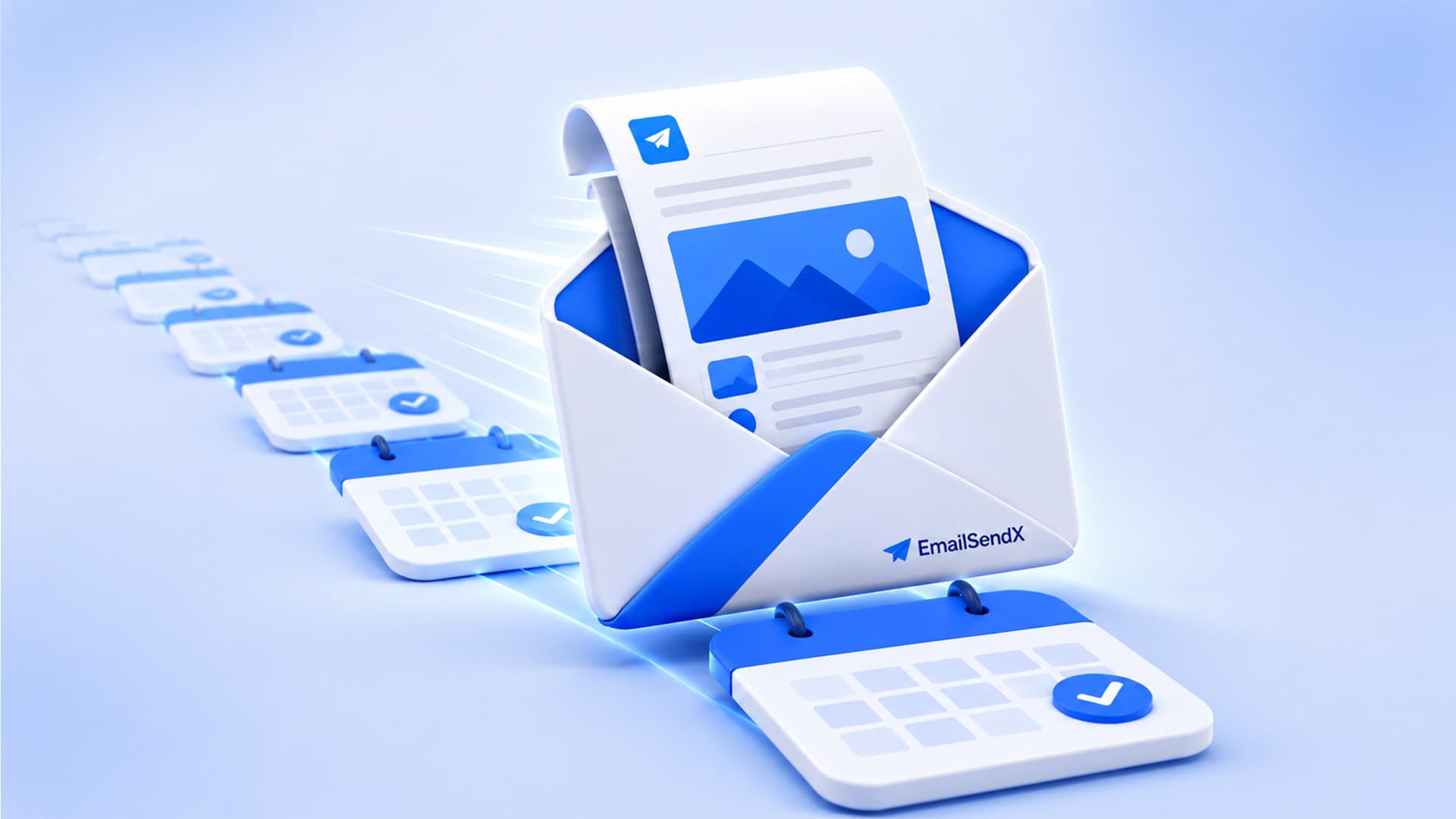
Put your sends on a calendar so they are decisions you make once, not every time. The point of a plan is to remove the weekly “should I send something?” debate.
Track a few numbers, ignore the rest
You do not need a dashboard full of metrics to know if email is working. For a simple plan, watch a handful of numbers and let the rest go.
- Opens tell you whether your subject lines and timing are landing. Look for real opens that filter out bots, so you are reading human interest and not noise.
- Clicks tell you whether the content and offer earned action.
- Replies are the strongest signal of all, especially for a small business building relationships.
- Unsubscribes are worth a glance, but a steady trickle is normal and healthy. It keeps your list made of people who want to be there.
Clear analytics and reporting make this easy to check at a glance. And because replies matter so much, having a built-in CRM and shared inbox means the conversation you started with an email does not get lost in a personal mailbox. When someone replies, you can pick it up and keep it moving.
Pick tools that match a simple plan
Your plan should not depend on tools you will outgrow or cannot afford as your list grows. Two things are worth checking before you commit.
First, pricing. Many platforms charge per contact, so your bill climbs just because your list grew, even if you send less. Flat pricing with no per-contact fees keeps costs predictable, which matters when you are still proving that email is worth the effort.
Second, sending flexibility. Being able to bring your own sending provider, such as Amazon SES, SMTP, SendGrid, Brevo, Mailgun, Postmark, Resend, or Gmail, means you are not locked into one path. If you are comparing options, a Mailchimp alternative built for small teams is worth a look, and there are tailored setups for a small business, an agency, an ecommerce store, or a SaaS product.
Put it on one page and hit send
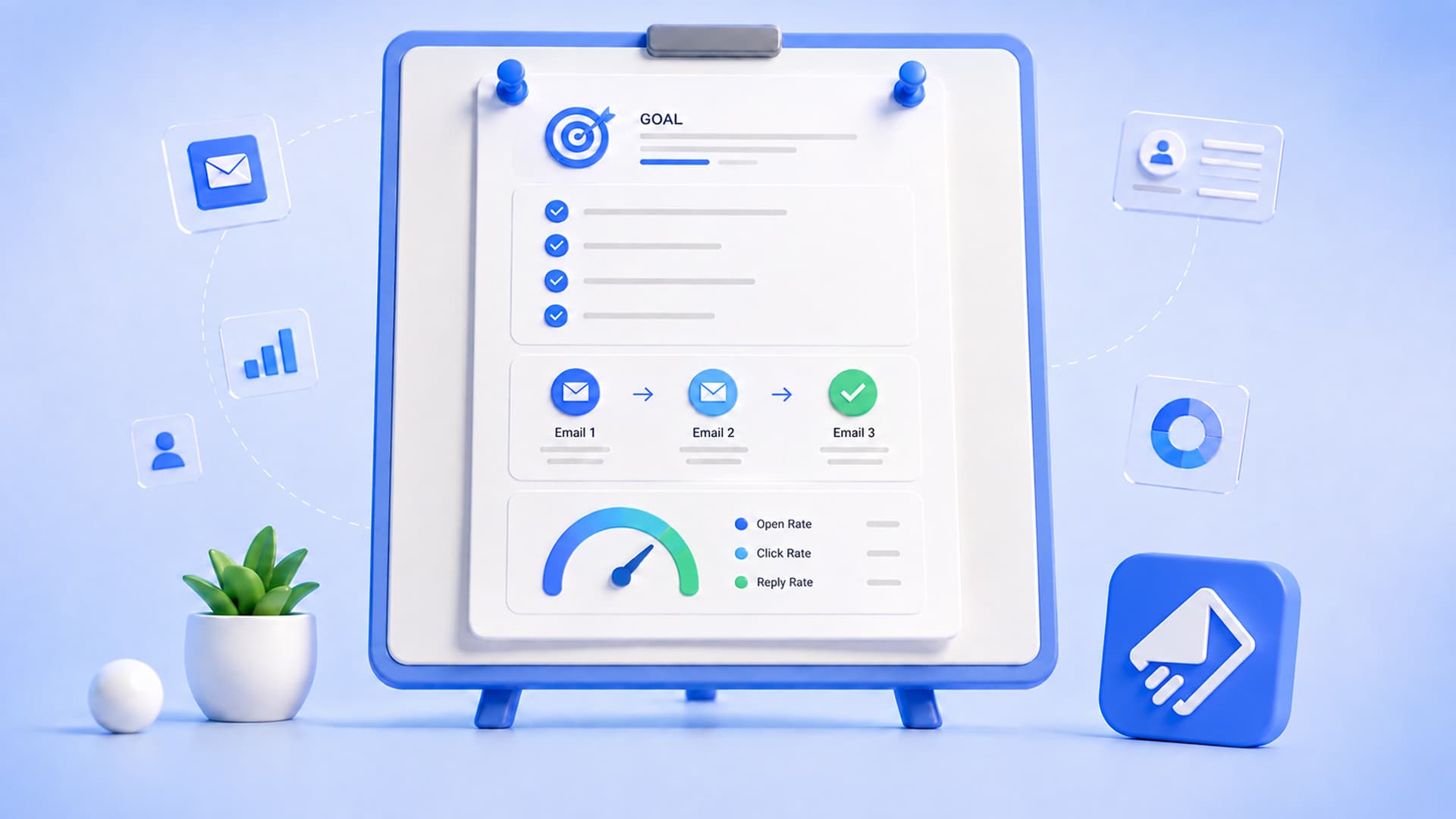
You now have everything a simple email marketing plan needs: one goal, a permission-based list, a decision about broadcasts and sequences, a first welcome sequence, a rhythm you can keep, and a short list of numbers to watch. Write it on a single page. The plan that ships beats the perfect plan that sits in a draft folder.
The best part is that once your welcome sequence is live, most of the work happens without you. That is the whole idea: email that follows up for you, so a new subscriber gets a warm, timely reply even on the days you are busy running everything else. When you are ready, start free with EmailSendX and send your first sequence this week.
Ready to put your email on autopilot?
Ready to try it?