On this page(9)
You’re Paying 32× More for Email Than AWS Charges — Here’s Why
Here is the uncomfortable arithmetic of email marketing in 2026: a 100,000-contact list on Mailchimp Standard runs about $1,400 per month. The same list, sending the same volume, through Amazon SES on a flat-fee control plane runs about $183 per month. That’s an annualized savings of $14,604. The platforms charging $1,400 are not delivering more value — they’re marking up the same AWS infrastructure that anyone with a credit card can rent directly. You must know how to reduce email marketing costs.
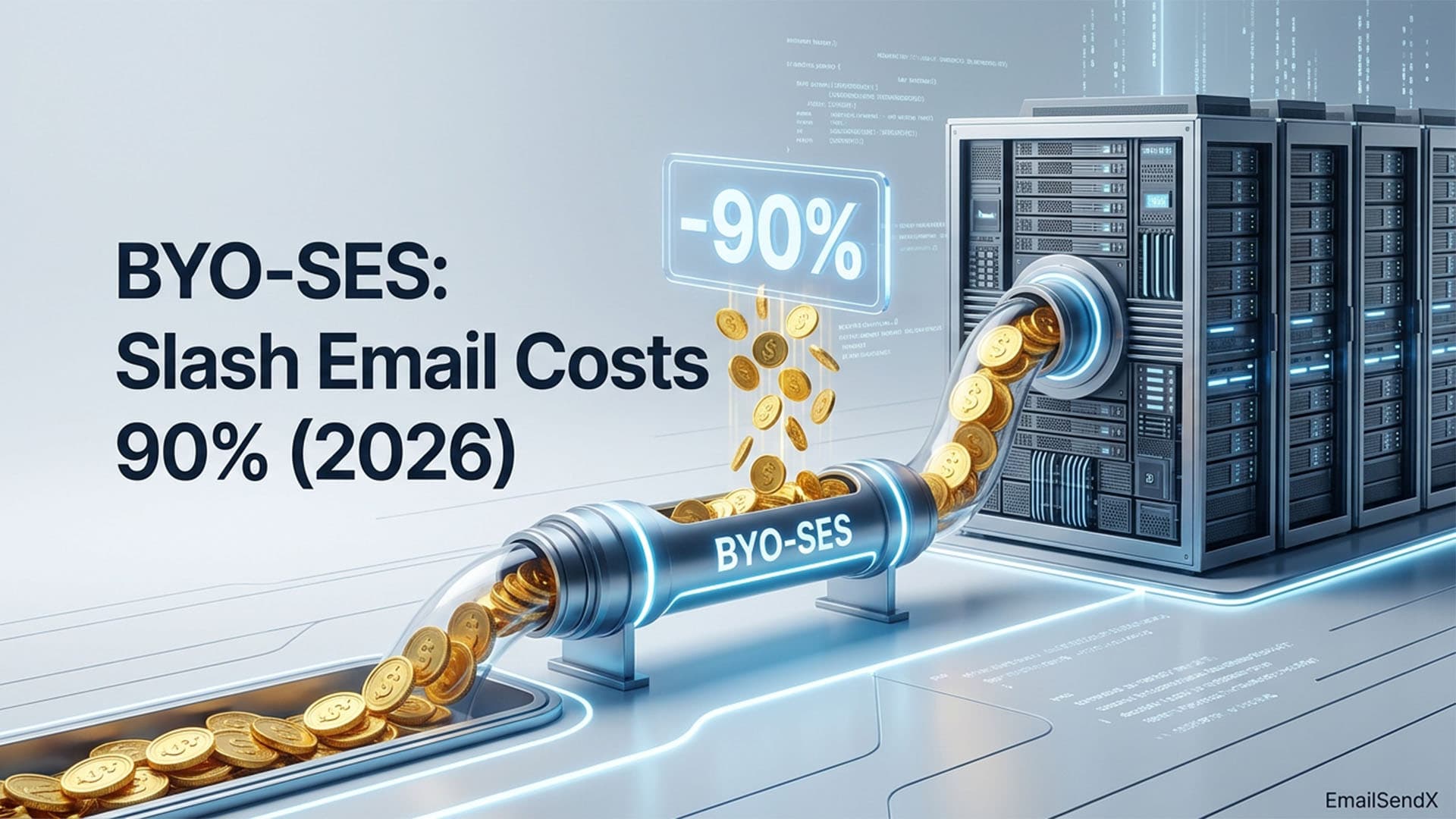
This is the 2026 playbook for reducing email marketing costs by 80–95% using BYOS — bring-your-own-SES — without giving up automation, deliverability, segmentation, or any feature that actually matters.
The thesis: The marketing dashboard is software. The sending pipe is infrastructure. Don’t pay SaaS markup on infrastructure.
Why Email Marketing Is Wildly Overpriced in 2026
The pricing model of every legacy email marketing platform — Mailchimp, Klaviyo, Constant Contact, ActiveCampaign — is built on a 2010 assumption: the platform owns the sending infrastructure and prices on contacts because that’s the easiest signal of value. In 2010, this was reasonable. AWS SES had just launched, and self-hosting email was genuinely hard.
In 2026, none of that is true. SES is mature. SMTP is a commodity. The tooling to manage contacts, design templates, and run automations is just software — and software shouldn’t cost $1,400/month.
The BYOS Math: What You Actually Save
| List size | Sends/mo | Mailchimp Standard | BYOS (Pro plan + SES) | Annual savings |
|---|---|---|---|---|
| 5,000 | 50,000 | $75 | $29 | $552 |
| 10,000 | 100,000 | $110 | $34 | $912 |
| 25,000 | 250,000 | $330 | $49 | $3,372 |
| 50,000 | 500,000 | $700 | $133 | $6,804 |
| 100,000 | 1,000,000 | $1,400 | $183 | $14,604 |
| 500,000 | 5,000,000 | $3,200+ | $583 | $31,404 |
What BYOS Actually Means
BYOS — bring-your-own-SES — means three things working together:
- You own the sending account. Amazon SES, SendGrid, Mailgun, Postmark, Resend, Brevo, Gmail (OAuth), or any SMTP relay.
- You own the IP reputation. Warmed IPs follow you if you switch platforms.
- You pay infrastructure cost, not SaaS markup. ~$0.10 per 1,000 emails on SES vs ~$3+ per 1,000 on legacy platforms.
The 5-Step Migration Plan
Step 1: Set up your sending infrastructure
Spin up an AWS account (free tier covers it for the first year). Verify your sending domain in SES. Configure DKIM (RSA-2048), SPF, DMARC. Request sandbox exit. Total time: 30 minutes for a non-engineer with the SES setup guide.
Step 2: Choose a BYOS-compatible platform
Not all platforms allow BYOS. The ones that do, in 2026:
- EmailSendX — 8 providers, full agency feature set, $12–$83/mo flat.
- HighLevel — locked to Mailgun, $97+/mo.
- Sender.net — SMTP-friendly, lighter feature set.
- Custom DIY (Postmark + Customer.io + n8n) — engineering-heavy.
Why provider lock-in costs more than month-1 price
The cheapest BYOS platform that locks you to one sending provider is more expensive long-term than a slightly pricier platform with provider failover. Reputation portability is the long-term asset, not the monthly subscription line.
Step 3: Export your existing data
- Contacts, with consent timestamps and tags.
- Suppression list (unsubscribes + complaints).
- Segment definitions.
- Active automations / flows.
- Templates.
Step 4: Import + warm up
Import contacts and suppression lists. Verify domains in the new platform. Begin a 30-day IP warmup if you’ve provisioned a dedicated SES IP. Send first test campaigns to your most engaged segment.
Step 5: Cut over and decommission
After 14–30 days of parallel sending, fully cut traffic to the new platform and cancel the old one. Confirm DNS records, suppression list parity, and reporting accuracy.
The Hidden Wins of BYOS Beyond Cost
1. Reputation portability
Your warmed-up SES IPs are yours. If you ever switch marketing platforms again, you don’t restart warmup — the SES account moves with you.
2. Deliverability control
You see SES’s reputation dashboard, the SNS event stream, and the actual bounce reason codes. Legacy platforms abstract these into “delivered” / “bounced” without the why.
3. Multi-region sending
SES has 12+ regions. Send EU traffic from Ireland, US traffic from Virginia, APAC from Sydney — for residency compliance and lower latency.
4. No surprise overages
SES is pure pay-as-you-go. No tier upgrades, no “you’ve exceeded your contact tier” bills. You’re always paying actual infrastructure cost.
What You Don’t Lose When You Migrate
The fear holding most teams back from BYOS is loss of features. In 2026, modern flat-fee platforms have feature parity with legacy SaaS:
| Feature | Mailchimp / Klaviyo | EmailSendX (BYOS) |
|---|---|---|
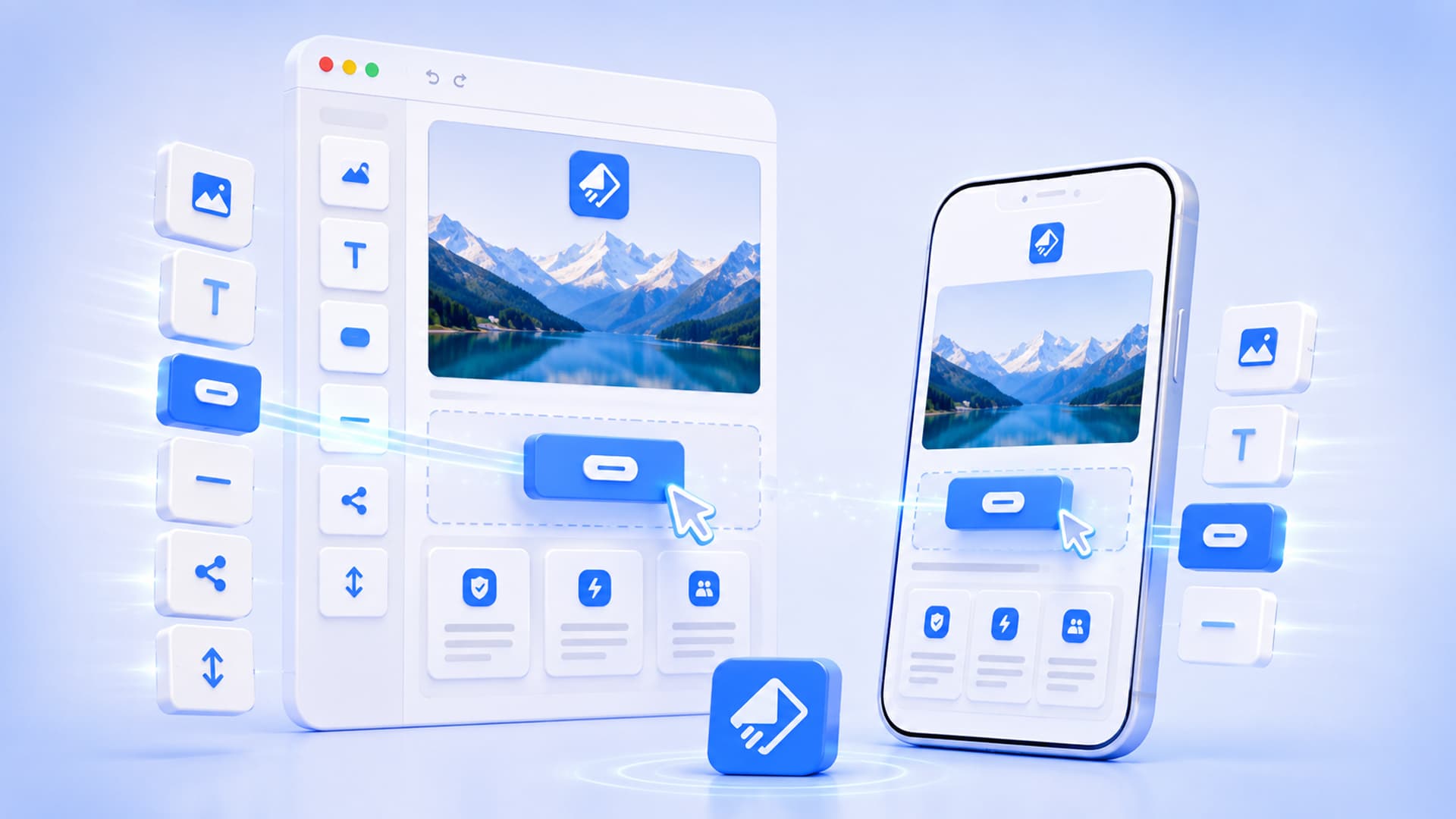
| Drag-and-drop builder | Yes | Yes |
| Visual automation builder | Yes | Yes |
| A/B testing | Yes | Yes (subject, sender, send-time, content) |
| Real-time analytics | Yes | Yes |
| AI subject + body assist | Partial / paid | Yes, every plan |
| Built-in CRM | Limited | Yes (deals, pipelines) |
| Multi-workspace | No / per-account | Unlimited |
| White-label | No | Yes |
How EmailSendX Implements the BYOS Promise
EmailSendX is a control plane: you bring the sending pipe, the platform handles everything else. Connect your SES (or any of 7 other providers) in under 60 seconds, and you’re sending campaigns through your own infrastructure with the full premium feature set on top.
- Provider failover — chain SES → Postmark → SendGrid for resilience.
- Reputation dashboard — bounce, complaint, delivery rates, blacklist alerts.
- SPF/DKIM/DMARC wizard — per-domain DNS validation.
- Cost analytics — per-workspace, per-provider spend visibility.
Connect your SES, save 80–95%, keep every feature you actually use.
Start BYOS with EmailSendX →
FAQ: BYOS Email Marketing
Is BYOS really 90% cheaper, or is that marketing math?
It’s real math, validated against current pricing. At 100k contacts and 1M sends/month, Mailchimp runs ~$1,400. Pro plan + SES runs ~$183. That’s 87% savings, on identical volume.
Do I need to be technical to set up SES?
You need to copy DNS records and click through the AWS console. There’s no code. Most non-engineers complete SES setup in 30 minutes.
Can I switch platforms again later?
Yes. Your SES account stays with you, IP reputation intact. The marketing platform is replaceable; the sending infrastructure is yours.
What about deliverability after migrating?
If you warm a new IP, deliverability matches or exceeds legacy platforms within 30 days. If you start with a shared SES pool, deliverability is comparable from day one.
Is there a downside to BYOS?
One: you have to set up SES once. After that, the cost, reputation, and portability advantages are permanent.
Ready to try it?