On this page(9)
How to Re-Engage Inactive Email Subscribers
Every list grows a quiet corner: people who opted in, then stopped opening. This guide is for marketers, founders, and agency operators who want a practical, permission-based way to win those people back. You’ll learn how to re-engage inactive email subscribers with a clear definition of “inactive,” a short win-back sequence, and a plan for what to do when someone still doesn’t respond.
What “inactive” actually means
Before you can re-engage anyone, you need a definition you can act on. “Inactive” is not one thing, and the right threshold depends on how often you send. A newsletter that goes out weekly reaches a fair judgment faster than one that sends once a quarter.
Pick a window that fits your cadence. A common starting point is no opens or clicks over the last 90 days, but adjust it to match your rhythm. If you send daily, 90 days of silence is a very cold signal. If you send monthly, you might wait longer before you call someone inactive.
- Recency: How long since they last opened or clicked?
- Frequency: How many of your recent sends did they engage with?
- Lifecycle stage: A brand-new subscriber who hasn’t opened yet is different from a two-year customer who went quiet.
One caution on opens: open tracking is noisier than it used to be, because some mail clients pre-load images and inflate opens. That’s why real signals like clicks and replies matter more when you’re deciding who is truly disengaged. EmailSendX includes real-opens tracking that filters bots, which helps you trust the difference between a genuine open and an automated one.
Segment before you send
Blasting your whole quiet list with the same message wastes your best shot. Group inactive subscribers so your re-engagement email speaks to why they went silent.
- Never-engaged: Signed up but never opened. Often a weak signup source or a mismatched expectation.
- Faded regulars: Used to open often, then drifted. These are your highest-value targets, because they liked you once.
- Seasonal or transactional: People who only engage around a specific need. They may not be inactive so much as waiting.
Good contact management makes this easy: you can build these groups from engagement history instead of guessing. If your data is scattered, a re-engagement effort is really a data-cleanup effort in disguise.
Fix the obvious problems first
Sometimes people go quiet for reasons that have nothing to do with your content. Rule those out before you write a single word.
- Frequency mismatch: You may simply be sending more (or less) than they expected at signup.
- Wrong content: They subscribed for one thing and started receiving another.
- Dead or mistyped addresses: Some “inactive” subscribers were never reachable. Running built-in list verification removes invalid addresses so your win-back campaign lands with real people and your metrics stay honest.
Cleaning first also protects your sender reputation. Repeatedly mailing addresses that bounce or never engage can quietly hurt how mailbox providers treat the rest of your list.
Write a re-engagement sequence, not a single email
One “we miss you” email rarely does the job. A short, respectful sequence gives people a few chances to notice you again without becoming a nuisance. The key with any follow-up is that it should stop the moment someone re-engages.
That’s the whole idea behind EmailSendX: automated follow-up sequences that pause the instant someone replies or clicks, so you’re never pestering a person who just came back. Email that follows up for you means you set the logic once and let it run.
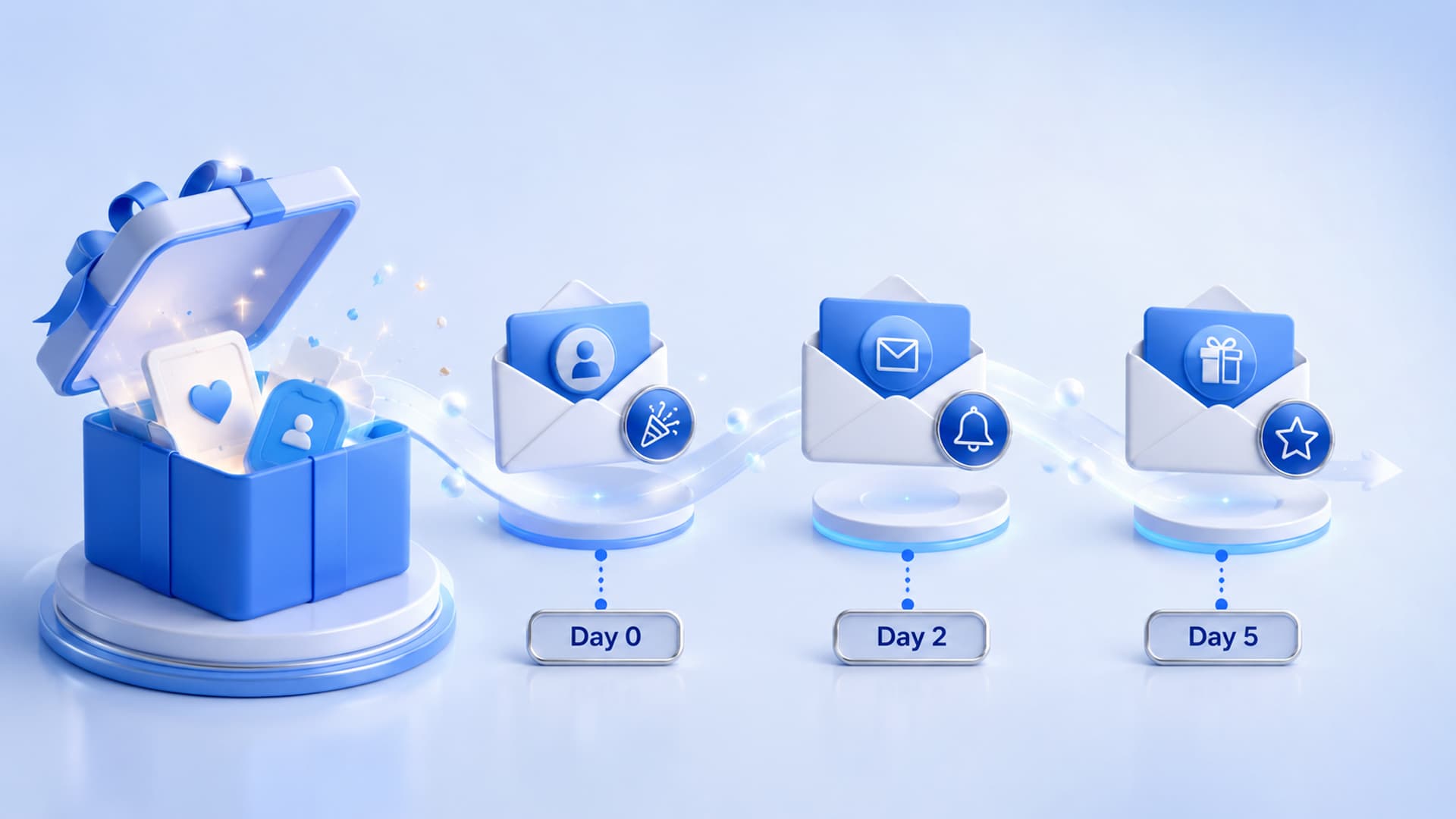
Here’s a simple three-email win-back sequence you can adapt:
- Email 1 – The gentle nudge (day 0). Acknowledge the gap, remind them what they signed up for, and offer one clear reason to open the next one.
- Email 2 – The value reminder (day 4). Lead with your single best piece of content, offer, or resource. Make it the easiest yes on the list.
- Email 3 – The clear ask (day 8). Ask directly whether they still want to hear from you, with an obvious way to stay and an obvious way to leave.
Anyone who opens, clicks, or replies along the way exits the sequence and returns to your normal sending. Everyone else moves to the last step, where you make a clean decision.
Subject lines that earn a second look
Your subject line is doing all the work here, because these people have been ignoring your inbox presence. Keep it plain, curious, and honest.
“Still want these from us?”
“We saved your spot – one quick question”
“Should we stop emailing you?”
“The one thing you might have missed”
The direct “should we stop” angle feels risky, but it respects the reader and often outperforms softer lines, because it gives a real reason to act now.
Write copy that invites a reply
Re-engagement is a conversation, not a broadcast. The best win-back emails feel like a note from a person, not a template. A few principles:
- Be short. A quiet subscriber will not read five paragraphs. Get to the point in the first two lines.
- Give one clear action. One link, one button, one question. Choices reduce clicks.
- Make leaving easy. A visible unsubscribe or preference link builds trust and keeps your list healthy.
- Offer a real reason to stay. A helpful resource, a preference to lower frequency, or a genuine highlight of what’s coming.
A preference option is underrated. Some people don’t want to leave, they just want fewer emails. Letting them turn the dial down keeps a subscriber you would otherwise lose. When someone does reply, having a shared inbox means the conversation goes to a real place your team can see and answer, instead of vanishing into a no-reply void.
Decide what happens next – including goodbye
The hardest part of re-engagement is the discipline to let people go. If someone ignores a well-built win-back sequence, continuing to mail them helps no one. It drags down your engagement, muddies your metrics, and can weigh on how mailbox providers view your sends.
After the sequence ends, sort the non-responders:
- Suppress or sunset: Move consistent non-openers out of your active audience. You can keep them in a “dormant” group rather than deleting outright.
- Slow down: For borderline cases, drop them to a low-frequency track instead of full suppression.
- Learn from the pattern: If a whole signup source goes quiet, fix the source, not just the symptoms.
A smaller, engaged list beats a large, silent one on nearly every measure that matters. Keeping your list management tidy is part of the same job as running the win-back itself.
Measure, then repeat on a schedule
Treat re-engagement as a recurring hygiene task, not a one-time rescue. Watch how many people re-open, click, or reply during the sequence, and how many you cleanly retire at the end. Both numbers are wins: one grows your active audience, the other trims the dead weight.
Because trustworthy numbers depend on trustworthy tracking, lean on analytics that separate real engagement from bot noise. Run the win-back on a cadence that matches your sending, whether that’s monthly or quarterly, so your list never drifts too far before you act. Small businesses especially benefit from making this routine; you can see how the pieces fit together for an email marketing setup built for small teams.
Bringing it together
Re-engaging inactive subscribers comes down to a repeatable loop: define inactivity clearly, segment by why people went quiet, fix the obvious problems, run a short sequence that stops when someone responds, and cleanly retire the people who don’t. Done on a schedule, it keeps your list healthy and your metrics honest without any guesswork.
EmailSendX is built for exactly this kind of follow-up, with automation that pauses the moment someone re-engages, real-opens tracking, built-in verification, and flat pricing with no per-contact fees. Start free with EmailSendX and let it be the email that follows up for you.
Ready to put your email on autopilot?
Ready to try it?