On this page(7)
EmailSendX vs SendGrid (2026): the short answer
EmailSendX vs SendGrid both send transactional and marketing email reliably — the real difference is the model. SendGrid is an all-in-one service: you send through Twilio SendGrid’s own infrastructure on volume-based pricing. EmailSendX is a bring-your-own-provider control plane: you connect your own Amazon SES (or SMTP) and pay a flat platform fee, which gets dramatically cheaper as volume grows. Pick SendGrid for a turnkey API with a huge ecosystem; pick EmailSendX if you want to own your sending infrastructure and cut per-email cost.
If you’re evaluating a SendGrid alternative, the honest answer is that both are capable platforms — the right choice depends on whether you’d rather rent a sending service or own the pipe. Here’s a fair, side-by-side look.
Note: pricing and features change frequently — verify the latest details on each provider’s current pricing page before deciding.
At a glance Emailsendx vs Sendgrid
| Capability | EmailSendX | SendGrid |
|---|---|---|
| Model | Bring-your-own-SES/SMTP control plane | All-in-one sending service |
| Pricing shape | Flat platform fee + your provider’s cost | Tiered, scales with email volume |
| Cost at high volume | Very low (SES rates underneath) | Rises with volume |
| Infrastructure ownership | You own it (your SES account) | SendGrid owns it |
| API & SDKs | Modern API + SMTP relay | Mature API, many SDKs, big ecosystem |
| IP options | Shared & dedicated with auto-warmup | Shared & dedicated |
| Best fit | Cost-conscious & infra-owning senders, agencies | Teams wanting turnkey + ecosystem |
Deliverability
Both can deliver well — deliverability is driven far more by your authentication, list hygiene, and reputation than by the logo on the dashboard. SendGrid brings years of mature deliverability tooling and managed IP pools. EmailSendX leans on your own provider’s reputation (e.g. Amazon SES’s strong standing) plus authentication guidance, pre-send checks, and bounce automation. For most senders the deciding factor isn’t the platform’s ceiling but how well you follow the fundamentals on either one.
Pricing: where the models diverge
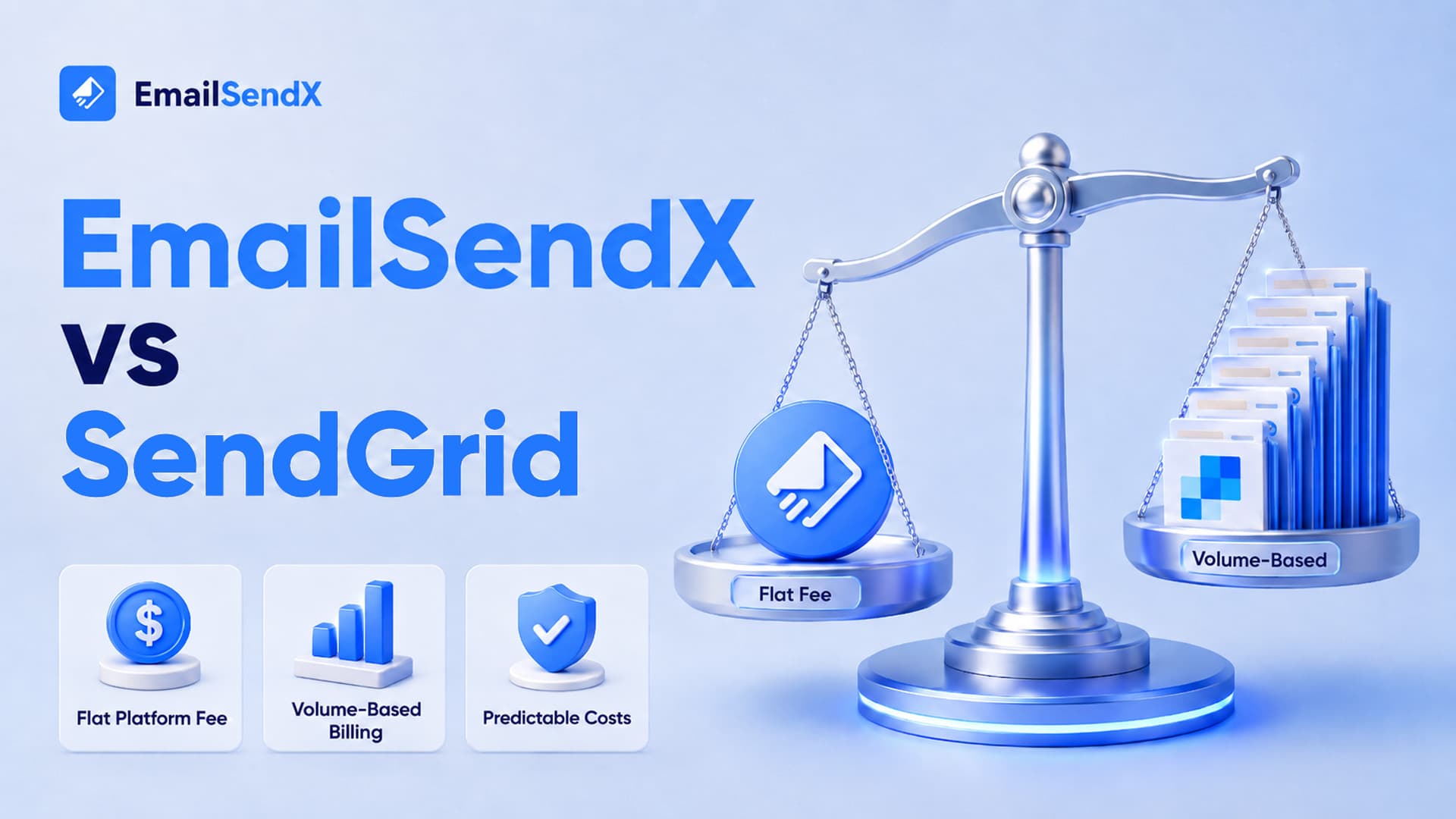
This is the heart of sendgrid pricing 2026 conversations. SendGrid charges by volume — convenient at small scale, but the bill climbs as you grow. EmailSendX separates the platform from the sending: you pay a flat platform fee and your underlying provider (SES) charges its own low per-email rate. At high, steady volume that separation is where EmailSendX typically wins on cost; at small volume, SendGrid’s simplicity can be worth the premium. Run your real monthly volume through both before committing.
Developer experience
SendGrid’s long-standing API, broad SDK coverage, and extensive documentation are a genuine strength, especially if you want something live in an afternoon with libraries for every language. EmailSendX offers a modern API and SMTP relay with the added flexibility of routing across your own providers — appealing if you want control and portability rather than lock-in.
Best for
| Choose… | If you… |
|---|---|
| EmailSendX | Want to own your infrastructure, cut per-email cost at scale, run multiple clients/brands, or avoid platform lock-in. |
| SendGrid | Want a turnkey service, the largest ecosystem and SDK coverage, and don’t mind volume-based pricing. |
An honest comparison cuts both ways: SendGrid is the safer “just works” default, and EmailSendX is the better economics-and-control play once you send seriously. Neither is universally “best” — the right pick depends on your volume and how much you value owning the pipe.
See the math on your volume
EmailSendX connects your own Amazon SES, handles authentication and IP warmup, and charges a flat platform fee — so your per-email cost stays low as you scale. Compare it against your current SendGrid bill.
Frequently asked questions
Is EmailSendX a good SendGrid alternative?
Yes, especially if you want to own your sending infrastructure and lower per-email cost at scale. EmailSendX connects your own SES/SMTP and charges a flat platform fee instead of volume-based pricing.
Which is cheaper, EmailSendX or SendGrid?
At high, steady volume EmailSendX is typically cheaper because you pay SES’s low rate plus a flat fee. At small volume SendGrid’s simplicity may be worth its premium. Compare your actual monthly volume on both.
Which has better deliverability?
Both can deliver excellently. Deliverability depends mostly on authentication, list hygiene, and reputation — not the platform brand.
What’s the best transactional email platform?
There’s no single winner. SendGrid suits teams wanting turnkey simplicity; EmailSendX suits those prioritizing cost control and infrastructure ownership.
Ready to try it?