On this page(7)
Dedicated vs shared IP for email: the short answer
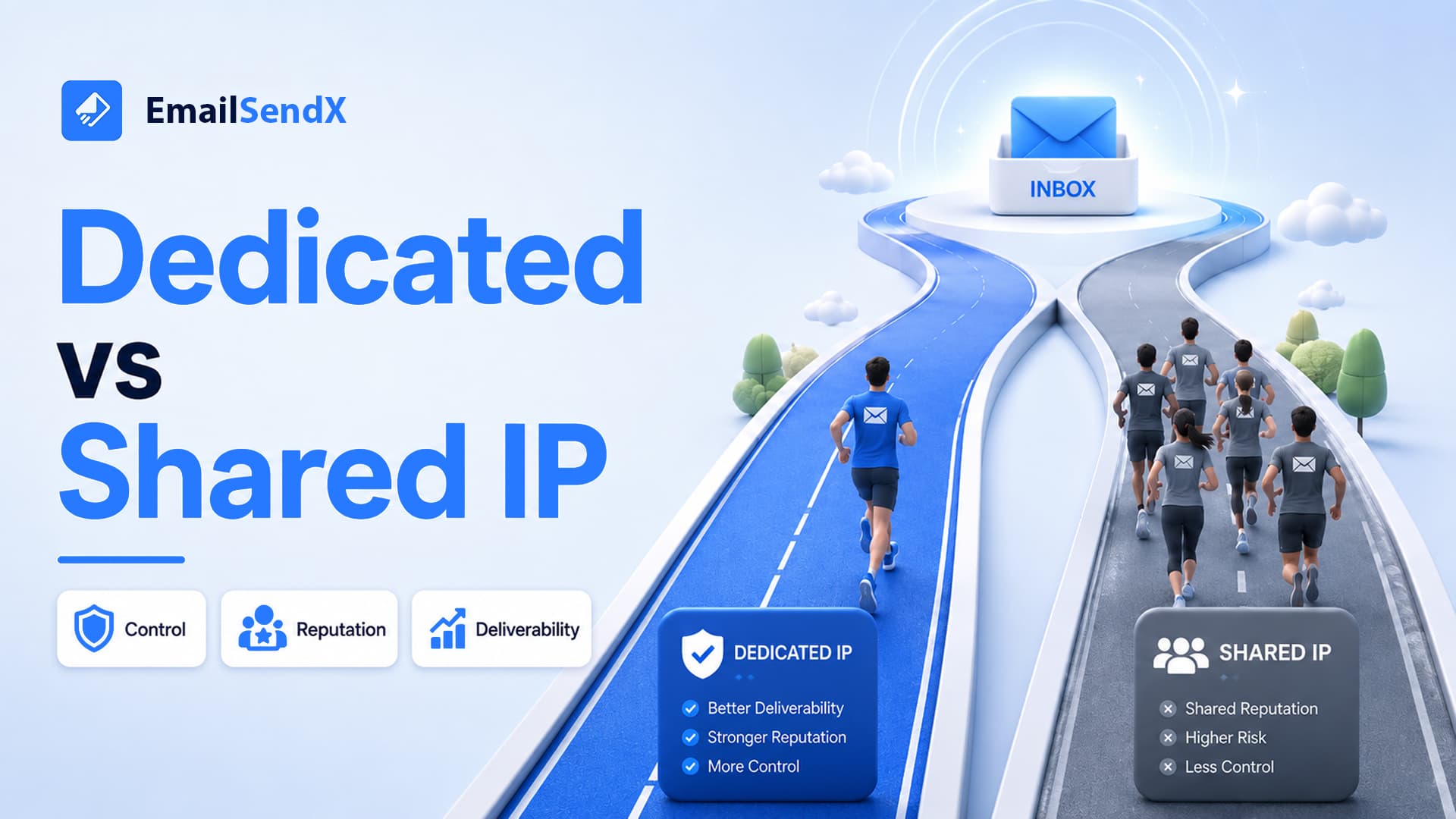
Dedicated vs shared IP for email comes down to volume and control. A dedicated IP is an email sending IP used only by you, so your reputation is entirely your own. A shared IP pools reputation across many senders. The rule of thumb: send low or inconsistent volume (under ~50,000/month)? Use a shared IP — the pooled, established reputation helps you. Send high, steady volume? A dedicated IP gives you control and isolation.
It’s one of the most over-thought decisions in email. The instinct is “dedicated sounds more professional,” but a dedicated IP with low volume is actually worse for deliverability. Here’s how to choose correctly for dedicated vs shared IP email.
What’s the difference?
| Dimension | Dedicated IP | Shared IP |
|---|---|---|
| Reputation | 100% yours — you control it | Shared with other senders on the pool |
| Best volume | High & steady (50k+/month) | Low / variable |
| Warmup | Required — starts at zero | Not needed — pool is already warm |
| Risk | You alone bear your mistakes | A bad neighbor can affect you |
| Cost | Higher | Lower / included |
When to use a dedicated IP
Choose dedicated when you can answer yes to most of these — that’s the real test of when to use a dedicated IP:
- You send 50,000+ emails per month, consistently.
- Your volume is steady, not occasional bursts.
- You want full control over your reputation and isolation from other senders.
- You can commit to a proper IP warmup before sending at full volume.
Shared IP and deliverability
For most small and mid-sized senders, shared IP deliverability is actually better. A reputable provider’s shared pool has an established, warm reputation that a new dedicated IP simply can’t match on day one. The trade-off is that you rely on the provider to keep bad actors off the pool — which good providers actively police.
Use a shared IP
Volume steady?
Shared IP
Dedicated + warmup
The IP warmup factor
A new dedicated IP has zero reputation. Send at full volume immediately and providers treat the spike as an attack. IP warmup means ramping gradually — a few hundred a day, increasing over 4–6 weeks — to build trust. Skip it and your “professional” dedicated IP will underperform a shared pool for weeks.
A dedicated IP isn’t a status symbol — it’s a responsibility. Below the volume threshold, or without warmup, it actively hurts deliverability. Match the IP to your sending, not your ego.
How EmailSendX decides for you
EmailSendX routes your mail to the right email sending IP based on your actual volume — keeping smaller senders on a warm, well-policed shared pool and moving high-volume senders onto a dedicated IP with automated warmup. You don’t have to guess the threshold or babysit the ramp; the platform handles the routing and the warmup curve.
The right IP, automatically
EmailSendX picks shared or dedicated based on your volume and warms new IPs for you — so you get the best deliverability without managing IP reputation by hand.
Frequently asked questions
Is a dedicated IP always better?
No. Below ~50,000 emails/month or without warmup, a dedicated IP performs worse than a reputable shared pool because it has no established reputation.
When should I switch to a dedicated IP?
When you send high, consistent volume (typically 50k+/month) and want full control over your reputation — and can commit to a proper warmup.
What is IP warmup?
Gradually increasing send volume on a new IP over several weeks so mailbox providers build trust, instead of flagging a sudden spike as spam.
Can a shared IP hurt my deliverability?
Only if the provider lets bad senders onto the pool. Reputable providers police shared IPs closely, so for most senders shared deliverability is excellent.
Ready to try it?