On this page(9)
How to Build an Email List for Your Business
If you’re a small business owner, agency, ecommerce store, or service provider trying to figure out how to build an email list for your business, this guide is for you. We’ll cover the permission-based basics: where subscribers actually come from, how to earn the opt-in, and how to keep the list healthy so your emails land and get read. No cold-outreach shortcuts, just the durable stuff that compounds.
Why an email list is worth building
An email list is one of the few marketing channels you truly own. Social followers live on someone else’s platform, and paid ads stop the moment you stop paying. A list of people who chose to hear from you is an asset that stays with you as algorithms and ad costs shift around.
The catch is that “chose to hear from you” is the whole game. A list built on permission behaves completely differently from a list scraped or bought. People open, they click, and they don’t mark you as spam, because they remember signing up. That’s the foundation everything else in this guide rests on.
Start with permission, not a shortcut
The fastest-looking way to get a list is to buy one or scrape addresses. It’s also the fastest way to wreck your sender reputation and land in the spam folder. Skip it entirely.
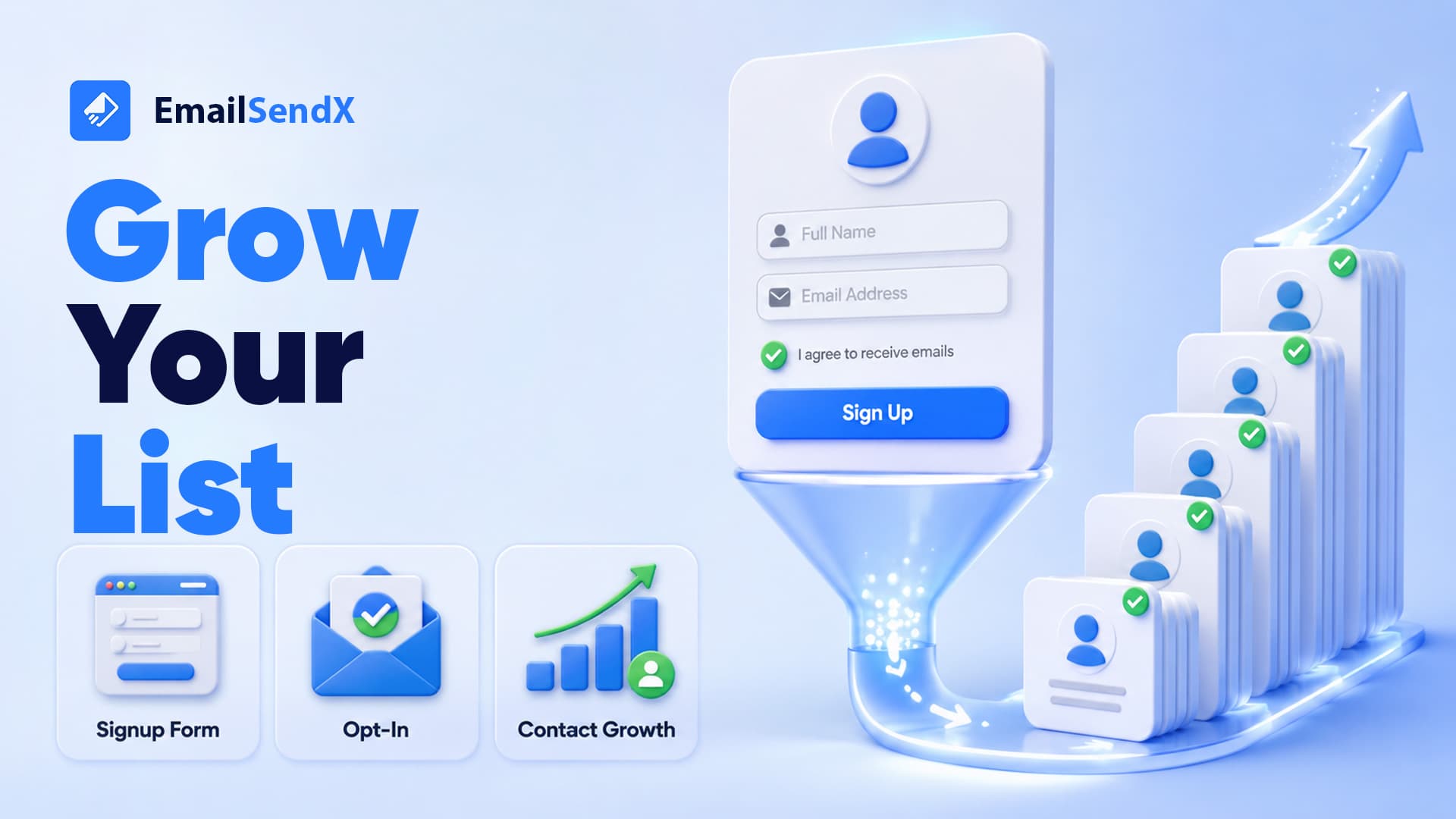
Permission-based list building means every contact took a clear action to join: they typed their email into a form, checked a box, or replied to confirm. That’s the standard email marketing platforms like EmailSendX are built around, and it’s what keeps your future emails welcome in the inbox instead of flagged.
- Do: collect emails through forms, checkout, content downloads, and events where people opt in.
- Do: make it obvious what they’re signing up for and how often you’ll email.
- Don’t: buy lists, scrape addresses, or add people who handed you a business card without agreeing to emails.
- Don’t: pre-check the subscribe box or bury consent in fine print.
Create a reason to subscribe
Nobody wakes up wanting more email. “Sign up for our newsletter” rarely converts on its own because it asks for something and offers nothing specific in return. Give people a concrete reason.
The most reliable reason is a lead magnet: a small, genuinely useful thing someone gets in exchange for their email. It should solve one narrow problem your audience actually has.
- A checklist or template (a launch checklist, a pricing calculator, a swipe file).
- A short guide or mini-course delivered over a few emails.
- A discount or early access for ecommerce and product businesses.
- A free tool, quiz, or assessment that produces a personalized result.
Match the magnet to what you sell. If you run an ecommerce store, a first-order discount pulls its weight. If you’re a consultant, a template that shows your thinking attracts the right people. The goal isn’t the biggest list, it’s a list of people who’ll care about what you send next.
Put opt-in forms where attention already is
Once you have a reason to subscribe, you need to ask in the places people already look. Spreading a few well-placed forms beats one lonely footer form.
- Homepage and high-traffic pages: a clear form above the fold or a tasteful inline block mid-page.
- Blog posts: an in-content offer that matches the topic someone is reading right now.
- Checkout and account creation: for ecommerce, a clearly labeled opt-in during purchase.
- A dedicated landing page: one page whose only job is to explain the offer and capture the email. This is where you send traffic from social and ads.
- Your email signature and social bios: a single link to that landing page.
Keep the form itself short. Email address alone is usually enough to start. Every extra field you demand costs you signups, so only ask for a first name if you’ll genuinely use it to personalize.
Confirm the opt-in and welcome people well
When someone subscribes, the relationship is at its warmest. They just raised their hand, and they’re curious. Don’t waste that with silence for two weeks.
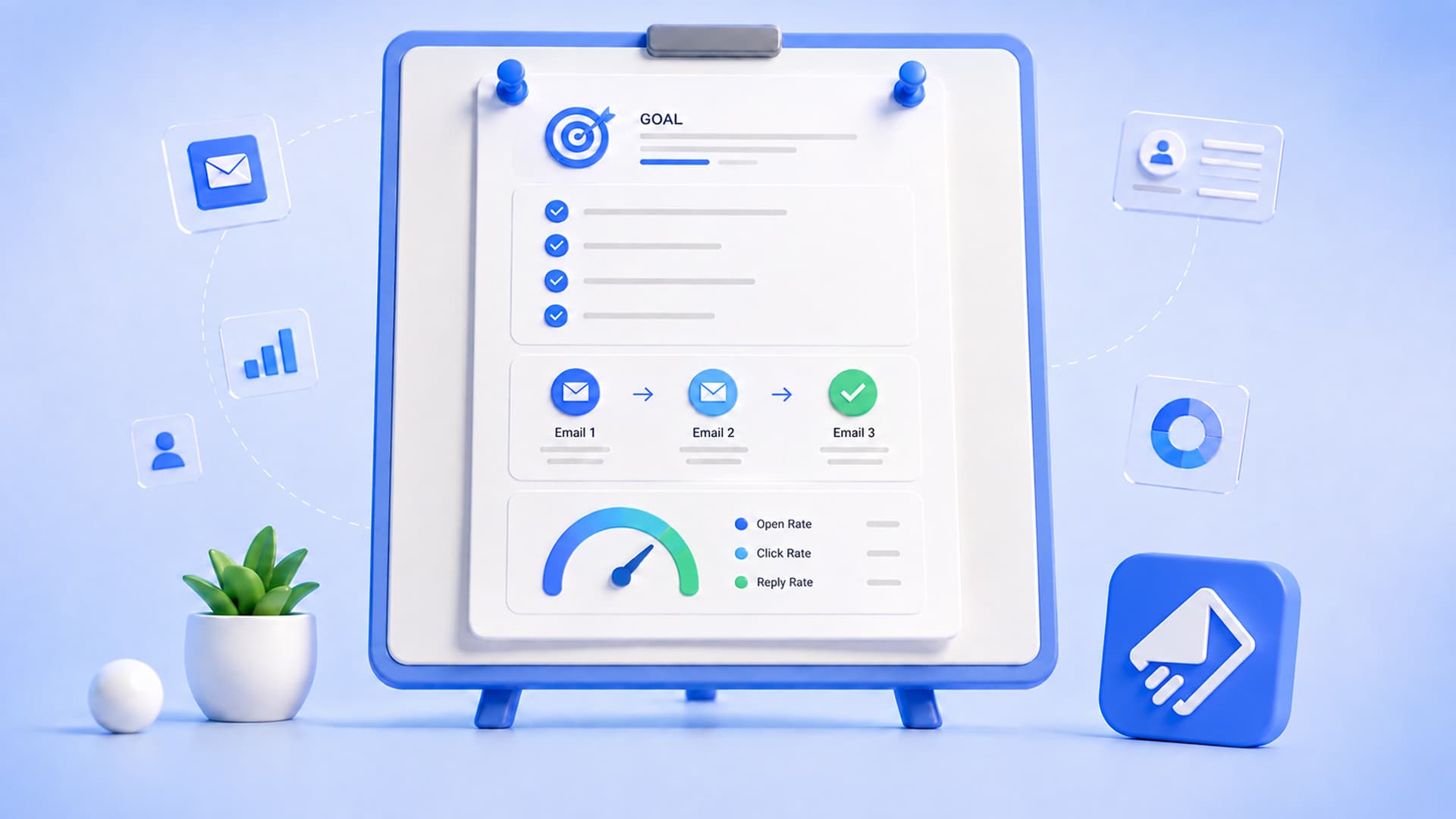
Send a welcome email immediately that delivers whatever you promised, sets expectations, and gives one clear next step. Better yet, set up a short welcome sequence that unfolds over the first several days. Here’s a simple three-email version you can adapt:
Email 1 (immediately): “Here’s your [lead magnet] plus what to expect.” Deliver the download, introduce yourself in a sentence or two, and tell them how often you’ll email.
Email 2 (day 2): “The one mistake most [audience] make.” Teach something small and useful that builds trust and shows you know their problem.
Email 3 (day 4): “If you’re ready, here’s how I can help.” A soft, specific invitation to your product, service, or a reply-back conversation.
This is exactly the kind of flow automated sequences are made for. With EmailSendX, the sequence runs on its own and stops the moment someone replies, so a warm conversation never gets stepped on by the next scheduled send. That’s the “email that follows up for you” idea in practice: you set it up once, and it does the timely follow-up you’d otherwise forget.
Keep your list clean from day one
Growing a list is only half the job. A list slowly fills with typos, abandoned addresses, and role accounts that never engage, and those drag down your deliverability over time.
Two habits keep a list healthy:
- Verify addresses as they come in. Catching a mistyped address at signup means you never email a dead inbox. EmailSendX includes built-in list verification so you can check addresses before they cost you.
- Watch real engagement, not vanity numbers. EmailSendX uses real-opens tracking that filters out bots, so your open numbers reflect actual humans. Over time, quietly re-engage or remove contacts who never open, and your remaining list gets stronger.
Good hygiene protects the people who do want your email. When inactive and invalid addresses pile up, mailbox providers notice, and your reach to engaged subscribers suffers. A smaller, cleaner list almost always outperforms a big, stale one. For teams that want more control here, list management tools make segmenting and pruning routine rather than a chore.
Grow steadily and treat replies as gold
List building isn’t a one-time launch. The businesses that end up with valuable lists are the ones that keep a small number of opt-in paths running and improve them over time. Test a new lead magnet. Move a form higher on the page. Mention your list when you publish something new.
And when people reply to your emails, that’s the signal you’re doing it right. Replies are where relationships and sales actually happen. A built-in CRM and shared inbox keeps those conversations organized so nothing slips, whether you’re a solo founder or an agency managing several clients. If you sell to a specific audience, it helps to see how this plays out in context, like email marketing for small businesses or email marketing for ecommerce.
Bringing it together
Building an email list for your business comes down to a handful of durable moves: earn permission, give people a real reason to subscribe, ask in the right places, welcome them warmly, and keep the list clean. Do those consistently and you’ll grow a list that opens, clicks, and buys, instead of one that just sits there.
When you’re ready to put this into motion, you can start free with EmailSendX, bring your own sending provider with flat pricing, and let the welcome sequences run themselves. It’s email that follows up for you, so you can focus on the work only you can do.
Ready to put your email on autopilot?
Ready to try it?