On this page(7)
What is white-label email marketing?
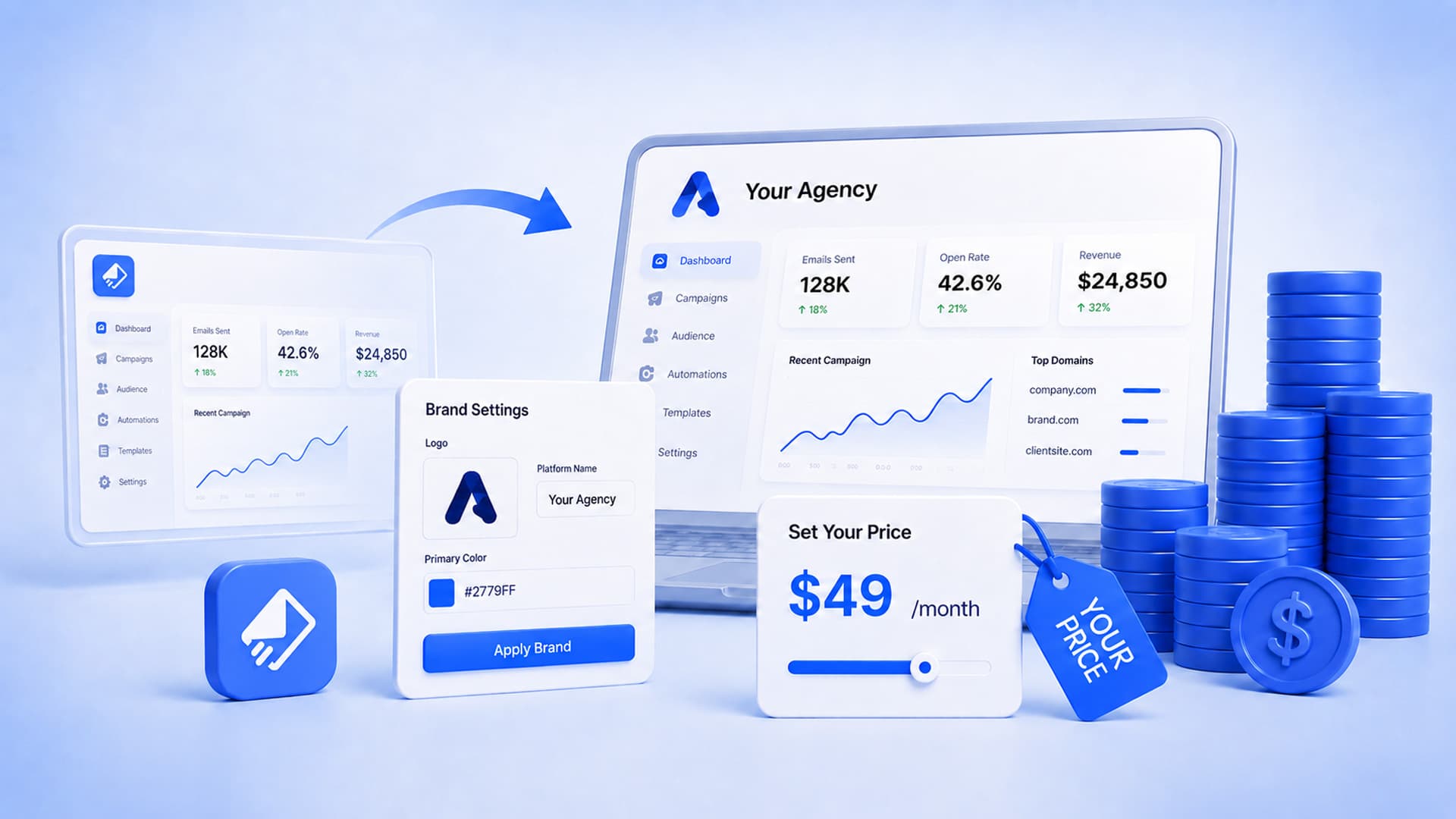
White-label email marketing is email software you send under your own brand instead of the vendor’s. The platform handles the campaigns, automation, and deliverability behind the scenes — while your clients see your logo, your domain, and your dashboard, never the provider’s. It’s how agencies, SaaS companies, and resellers offer “their own” email product without building one from scratch.
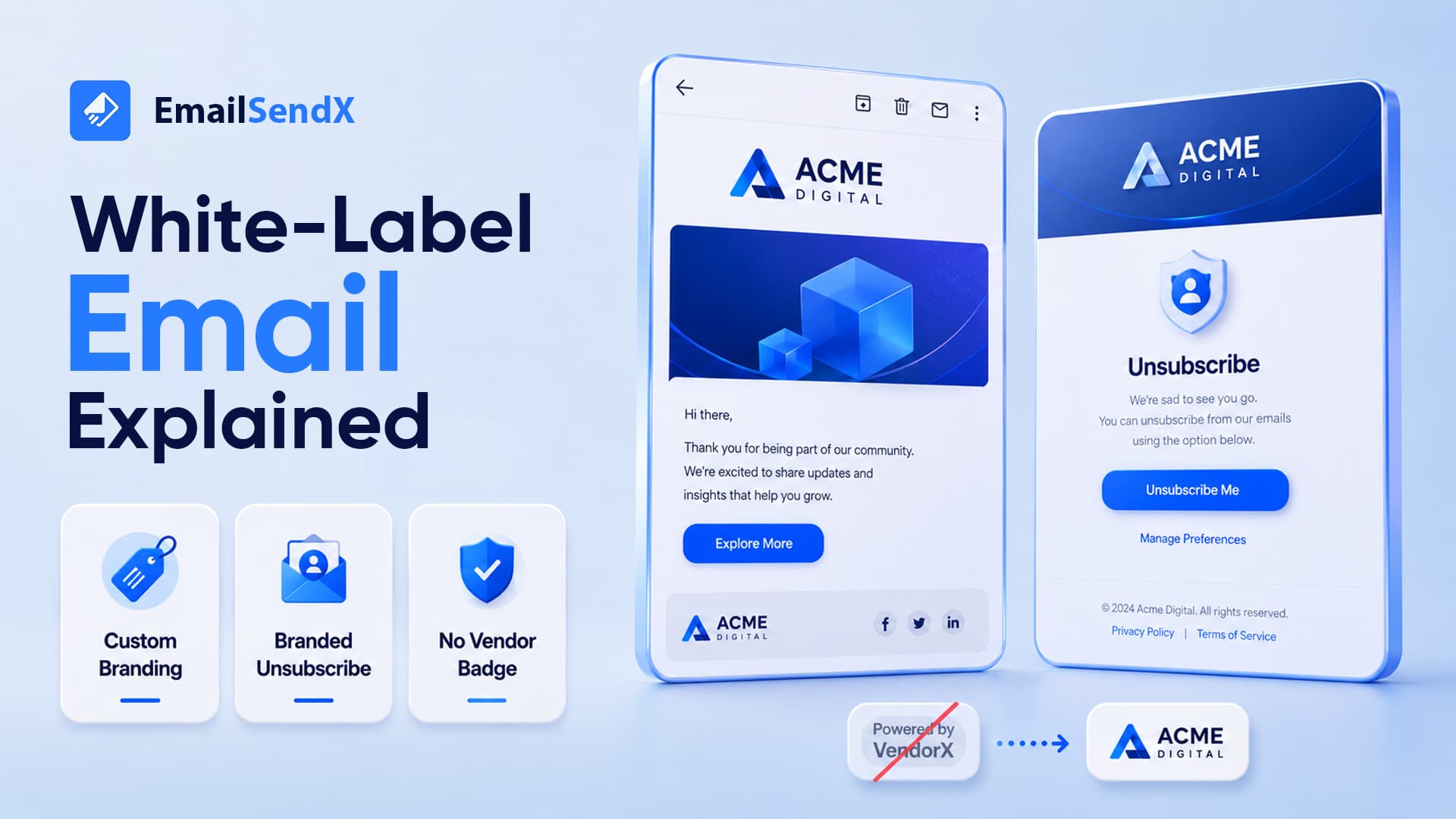
Picture this. You run a small agency. You’ve spent two years making a client’s brand look flawless — the website, the decks, the social. Then their first newsletter goes out and the unsubscribe footer reads “Powered by SomeBigTool.” In one line, the illusion breaks. Your client just learned you’re reselling someone else’s software, and you just turned a premium service into a markup.
That tiny footer is exactly the problem white-label email marketing solves. Let’s unpack what it actually is, how it works, and who genuinely needs it — without the jargon.
How white-label email marketing works
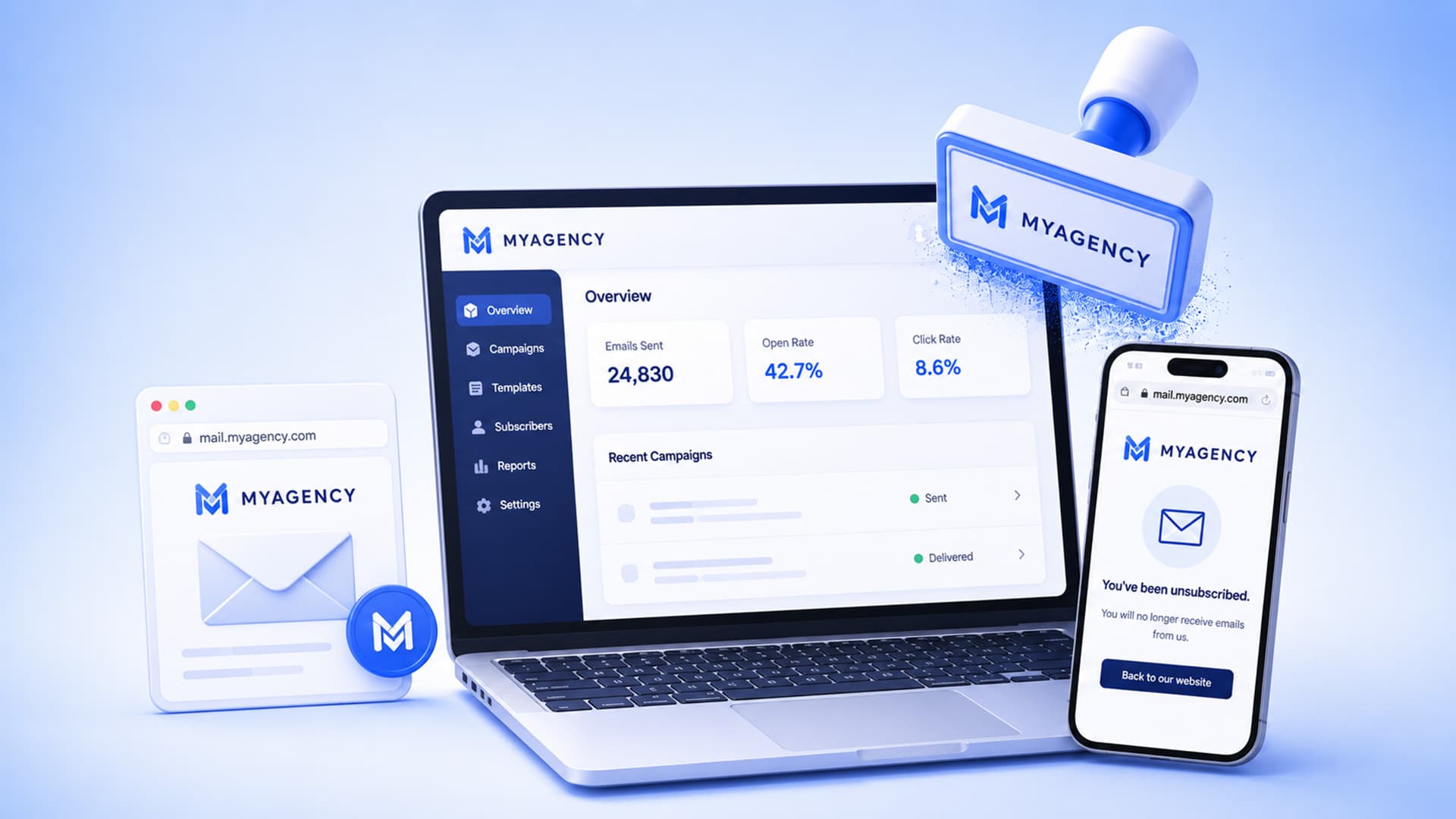
Think of it as two layers. On top is everything your client experiences: the brand, the login page, the campaign reports, the sender domain. Underneath is the engine a white label email service provider runs for you: the sending infrastructure, deliverability tooling, automation, and analytics. The magic is that the seam between them is invisible.
A true white label email platform lets you set all of this per client — separate workspaces, separate sending domains, separate branding — so one agency can run email for a dozen brands and each one feels like its own bespoke product.
Who actually needs white-label email marketing?
Not everyone does. If you send your own newsletter, you don’t need to hide anyone’s logo. White-label earns its keep when you’re sending on behalf of someone else:
- Agencies. This is the classic case — email marketing for agencies that manage campaigns for multiple clients and want every touchpoint to look in-house.
- SaaS products. Apps that need to offer email (notifications, campaigns) inside their own product without building a sending stack.
- Resellers & consultants. A white label email reseller packages the platform under their own name and pricing, turning someone else’s tool into their own revenue line.
- Franchises & multi-location brands. A head office that wants every location sending on-brand from one controlled system.
What “true” white-label actually covers
Here’s where most tools quietly fall short. They call themselves “white-label” because you can upload a logo — but their brand still leaks somewhere. Before you commit, check every touchpoint:
| Touchpoint | Truly white-label? | Why it matters |
|---|---|---|
| Sending domain | Mail comes from your domain | Recipients (and spam filters) see your brand, not the vendor’s |
| Dashboard & login URL | Your colors, your subdomain | Clients never land on the vendor’s site |
| Unsubscribe & preference page | Your branding, no vendor footer | The #1 place fake white-label gets exposed |
| Reports & exports | Your logo on every PDF | Deliverables look like you made them |
| Email headers / footers | No “sent via” line | Even the technical headers stay clean |
The unsubscribe page is the lie-detector test. If a platform brands the campaign beautifully but stamps its own name on the unsubscribe footer, it isn’t truly white-label — it’s just a logo upload.
White-label vs reseller: what’s the difference?
People mix these up. White-label is about branding — the product looks like yours. Reseller is about commercials — you buy access at one price and sell it at another. A white label email reseller program combines both: you rebrand the platform and set your own pricing and billing, keeping the margin. The best platforms support multi-workspace management so you can onboard, brand, and bill each client separately.
Read this article for more information: 11 Best White-Label Email Marketing Platforms for Agencies in 2026 (Honest Comparison)
What to look for in a white-label email platform (2026)
The category has shifted. A few years ago “white-label” just meant a logo swap. In 2026, with Google and Yahoo’s bulk-sender rules and AI-assisted sending now standard, the bar is higher. Look for:
- Per-client sending domains & authentication (SPF, DKIM, DMARC set up per brand) — reputation should never be shared by accident.
- Multi-workspace isolation so one client’s bad list can’t tank everyone else’s deliverability.
- Bring-your-own-provider economics — the flat-fee + your-own-SES model that keeps margins healthy as you scale.
- Genuinely unbranded touchpoints, especially the unsubscribe page and email headers.
- Modern features your clients now expect — automation, AI content help, and real-time deliverability reporting.
For a full breakdown of platforms that meet this bar, see our companion guide to the best white-label email marketing platforms.
White-label that’s actually white
EmailSendX gives agencies and resellers true white-label email — per-client domains, isolated workspaces, your branding on every touchpoint (yes, including the unsubscribe page), and bring-your-own-SES economics that protect your margin.
Frequently asked questions
What is white-label email marketing in simple terms?
It’s email software you send under your own brand. The vendor powers the sending, automation, and deliverability behind the scenes, while your clients only ever see your logo, domain, and dashboard.
Who needs a white-label email platform?
Mainly agencies, SaaS products, and resellers that send email on behalf of other brands and want every touchpoint to look in-house rather than show a vendor’s name.
What’s the difference between white-label and a reseller program?
White-label is about branding (the product looks like yours); reseller is about commercials (you buy at one price and sell at another). A white-label email reseller program combines both.
How do I know if a platform is truly white-label?
Check every touchpoint — sending domain, dashboard URL, reports, and especially the unsubscribe page. If the vendor’s name appears anywhere a client can see it, it isn’t truly white-label.
Ready to try it?