On this page(10)
Why 23% of Your Emails Are Probably Sitting in Spam Right Now
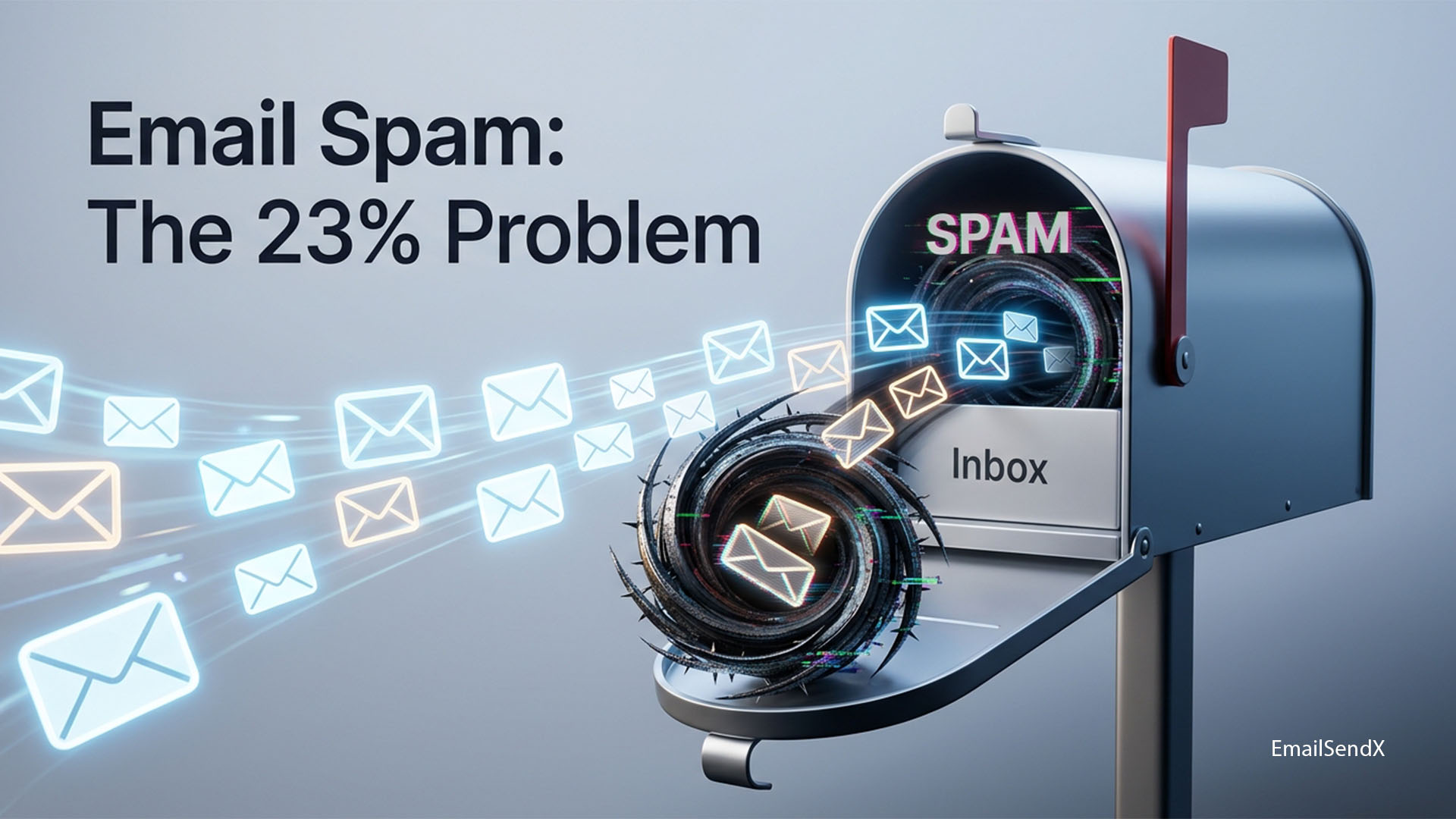
The hardest thing about email deliverability is that nothing visibly breaks. Your platform says “sent.” Your dashboard shows 99% delivered. And quietly, 23% of your audience is seeing your campaign in the spam folder. By the time you notice the open-rate dip, the damage is months old and the reputation is half-burned.
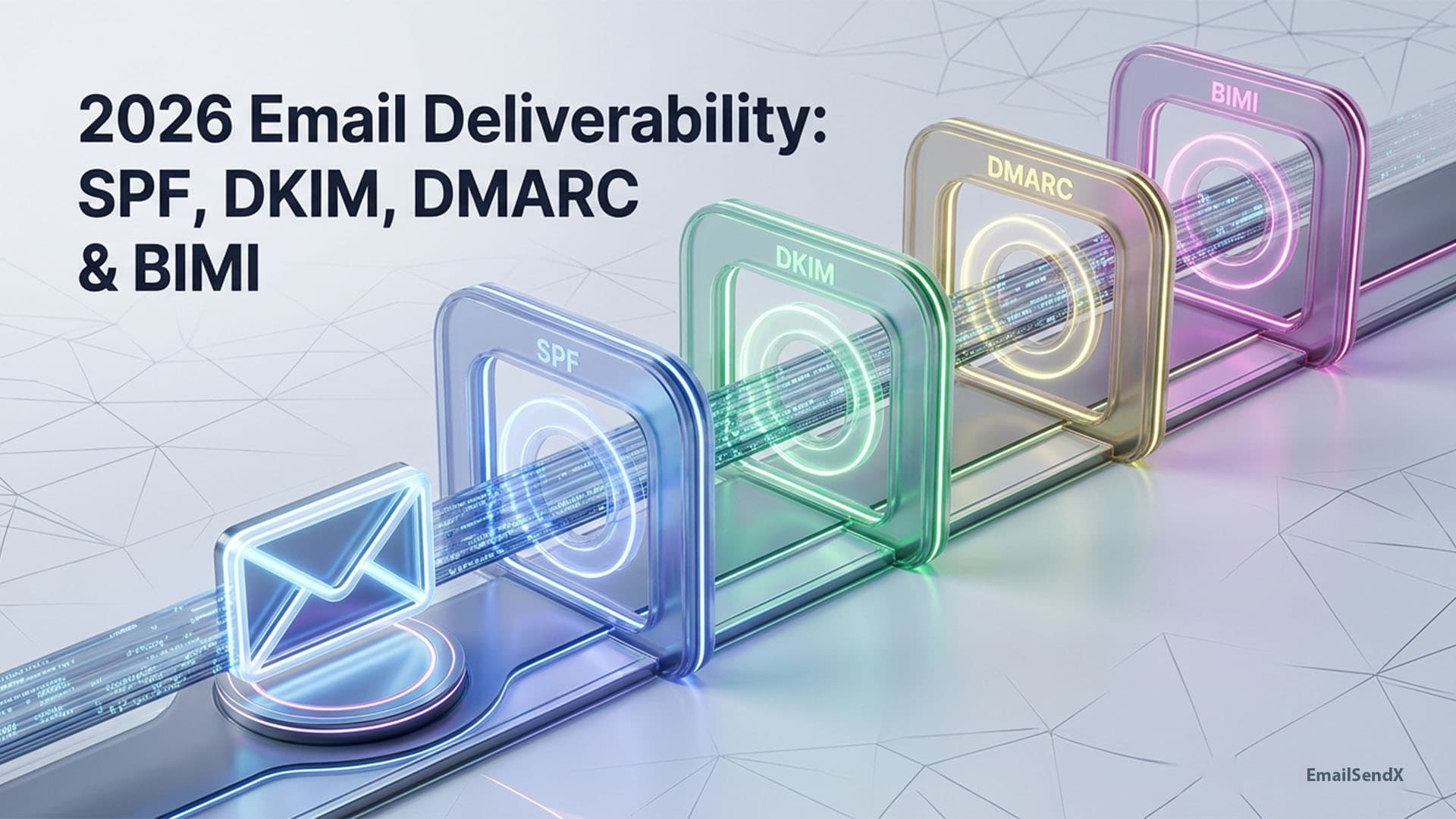
In 2026, deliverability is decided by four protocols: SPF, DKIM, DMARC, and BIMI. Gmail and Yahoo’s February 2024 sender requirements made all four functionally mandatory for any sender pushing more than 5,000 emails/day to either provider. Most marketers can’t explain the difference between the four. Here’s the no-jargon guide.
The 60-second model: SPF says “these servers are allowed to send for me.” DKIM says “this email wasn’t tampered with.” DMARC says “if SPF or DKIM fails, do this.” BIMI says “and show my logo if you trust me.”
Why Deliverability Got Harder in 2026
Three things converged:
- Gmail + Yahoo bulk sender rules (Feb 2024) — required SPF, DKIM, DMARC, one-click unsubscribe, and complaint rates under 0.3%.
- AI-generated spam tsunami — mailbox providers got radically more aggressive at filtering anything that pattern-matched generic AI.
- BIMI + VMC adoption — logos became a trust signal that legitimate brands started using to differentiate from phishing.
SPF: Sender Policy Framework
SPF is a TXT record on your domain that lists which servers are allowed to send email on your behalf. When Gmail receives a message claiming to be from @yourbrand.com, it checks the sending server’s IP against your SPF record. Match = pass. No match = fail.
Sample SPF record
v=spf1 include:amazonses.com include:_spf.google.com -allThe trap: 10-lookup limit
SPF can only do 10 DNS lookups before failing. Adding too many include: statements (one per provider) breaks SPF silently. The fix is SPF flattening services or consolidating senders.
DKIM: DomainKeys Identified Mail
DKIM cryptographically signs each outgoing email with a private key. Your DNS publishes the matching public key. Receivers verify the signature. If the email was tampered with in transit, the signature breaks.
In 2026, the standard is RSA-2048. RSA-1024 is being deprecated by Gmail.
Why it matters more than SPF
- SPF breaks when emails are forwarded. DKIM survives forwards.
- DKIM is the foundation of DMARC alignment.
- BIMI requires DKIM to be passing.
DMARC: The Policy Layer
DMARC ties SPF and DKIM together. It tells the receiver what to do when authentication fails: none, quarantine (send to spam), or reject. It also enables aggregate reports so you can see who’s sending email on your behalf.
Sample DMARC progression
| Stage | Policy | What it does |
|---|---|---|
| Week 1 | p=none |
Monitor only. No enforcement. |
| Week 4 | p=quarantine; pct=25 |
Quarantine 25% of failures. |
| Week 8 | p=quarantine; pct=100 |
Quarantine all failures. |
| Week 12 | p=reject |
Reject all failures. Phishing-proof. |
The DMARC report trap
Aggregate (rua) reports come as XML, often hundreds per week, from every receiver in the world. Most marketers just ignore them. Use a service like dmarcian, Valimail, or your platform’s built-in DMARC report parser to make them human-readable.
BIMI: Brand Indicators for Message Identification
BIMI is the youngest of the four. It lets receivers display your verified brand logo next to your sender name in the inbox. It requires:
- DMARC at
p=quarantineorp=reject(already enforced). - An SVG-tiny version of your logo, hosted at a public URL.
- (For Gmail/Yahoo) a Verified Mark Certificate (VMC) — ~$1,500/year from Entrust or DigiCert.
- A BIMI TXT record pointing to the SVG and VMC.
The lift is real. The conversion bump (4–15% measured open rate increase from BIMI‑enabled brands) makes it worth it for any brand sending more than 100k emails/month.
The Gmail and Yahoo Bulk Sender Requirements
If you send more than 5,000 emails/day to Gmail or Yahoo addresses combined, you must have:
- SPF and DKIM passing for your sending domain.
- DMARC published (at minimum
p=none, but quarantine recommended). - One-click unsubscribe (RFC 8058) in marketing email headers.
- Complaint rate below 0.3% — ideally below 0.1%.
- TLS encryption on all sending connections.
- Sender alignment —
From:domain matches authenticated domain.
The Deliverability Scorecard
A practical 10-point checklist any marketer can run today:
- SPF record published, passing, under 10 lookups.
- DKIM RSA-2048, signing every send.
- DMARC at
p=quarantineor stronger. - RUA/RUF reports parsed weekly.
- One-click unsubscribe (RFC 8058) in headers.
- Complaint rate < 0.1%.
- Hard bounce rate < 0.5%.
- Open rate > 20% (consumer) or > 30% (B2B).
- List hygiene every 90 days.
- BIMI logo published (for brands > 100k emails/mo).
How EmailSendX Handles Deliverability
Authentication is the single biggest barrier between marketers and the inbox. EmailSendX ships an SPF/DKIM/DMARC wizard that walks you through every DNS record per domain, validates them, and re-checks daily. The platform also includes:
- BIMI logo support (with VMC validation hint).
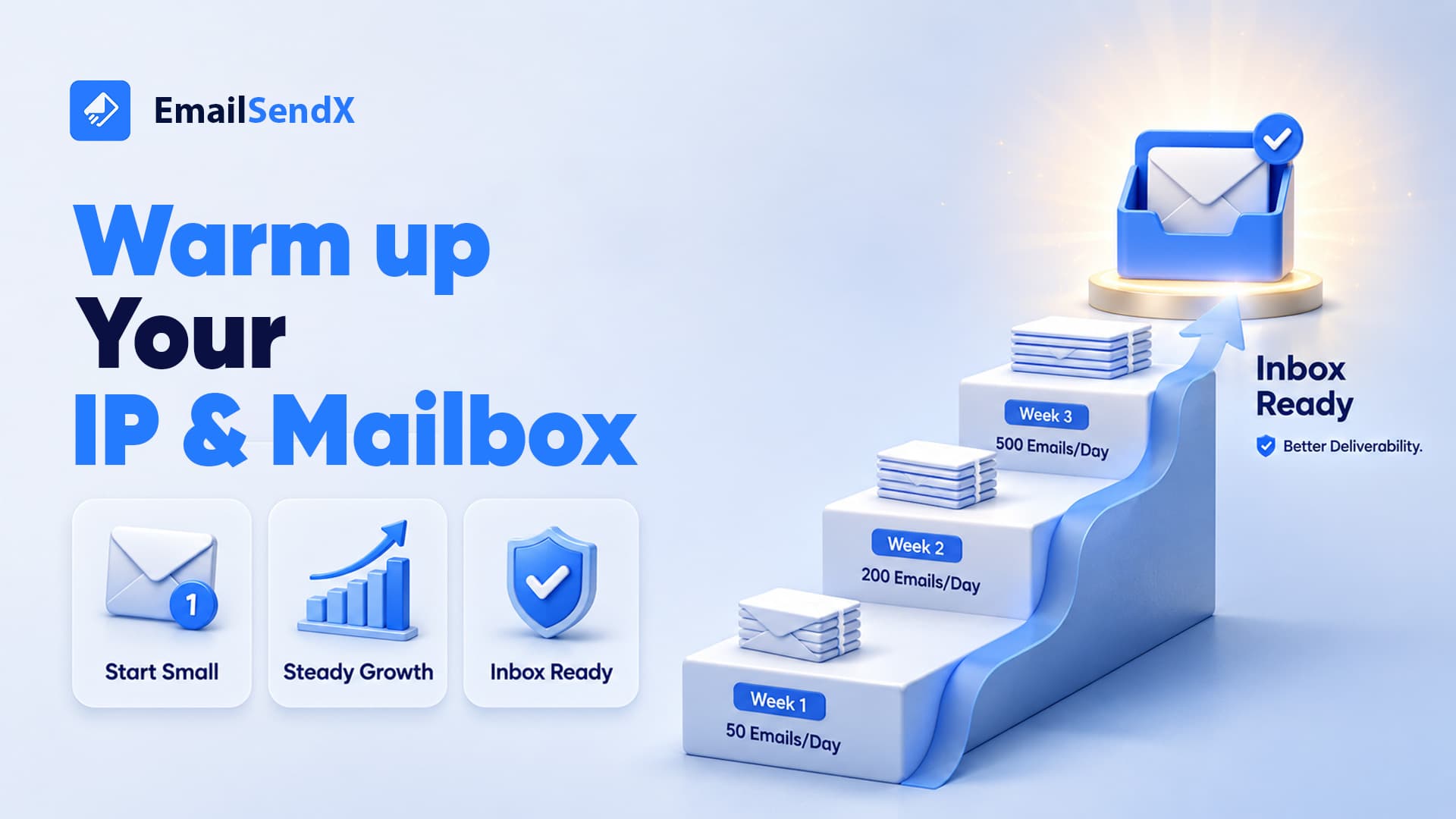
- IP warmup curves with daily targets.
- Real-time bounce, complaint, and reputation dashboard.
- Suppression-list enforcement across workspaces.
- Blacklist alerts (Spamhaus, Barracuda, SORBS).
- One-click unsubscribe (RFC 8058) on every campaign.
Run EmailSendX’s free deliverability check — no signup required for SPF/DKIM/DMARC validation.
Check my deliverability →
FAQ: Email Deliverability
What’s the difference between SPF and DKIM?
SPF authenticates the sending server (the IP). DKIM authenticates the email content (the cryptographic signature). They’re complementary, not redundant.
Do I really need DMARC?
For any domain sending marketing or transactional email at any volume in 2026, yes. Gmail and Yahoo treat unauthenticated bulk mail as suspicious by default.
How long does DMARC take to fully enforce?
Plan 12 weeks: 4 weeks at p=none to monitor, 4 weeks at quarantine 25–100%, then move to p=reject.
Is BIMI worth it for small senders?
Below 100k emails/month, the $1,500/year VMC is hard to justify. Above that, the open-rate lift typically pays back within a quarter.
Why are my emails going to spam even though SPF and DKIM pass?
Authentication is necessary but not sufficient. Engagement (opens, replies, no spam complaints), list hygiene, content quality, and IP/domain reputation matter equally. The deliverability scorecard above covers the full picture.
Ready to try it?